We are all familiar with the SP-4, ST-9, GV-20 and SI-14 points, and we know exactly where they are located on the body. But are we also familiar with Gōngsūn, Rényíng, Bâihuì and Bîngfēng? And do we know that in French they are called ‘Grandparent, Grandchild’, ‘Welcome to Mankind’, ‘The Hundred Gatherings’ and ‘Guardian of the Wind’? The points found along the various meridians, designated by letters and a number indicating respectively the meridian in question and the position of the points in relation to other points on the same meridian, are a relatively recent phenomenon. Indeed, this is a Western invention. Throughout history, each point had a name. This name provided information about the point: its location, its function, and so on. By reducing these points to familiar letters and numbers, much of this ancient knowledge—both practical and poetic—has been lost. In this article, Chris McAlister takes us on a journey of discovery through numerous points and focuses on their names. A fascinating world opens up as soon as we become aware of the richness of these points’ names.
Chinese Characters: Pragmatism Meets Clouds of Meaning
My first meeting with the inner workings of Chinese characters is etched indelibly into my memory. In the late summer of 1987, I was recovering from repeated bouts of debilitating illness, following 18 months on the road, often at high altitude and frequently with meagre nourishment and in less than luxurious lodgings.
I had been aware of the written Chinese language for over a year by that time, but had found no way of penetrating into its meaning. All of that ended one evening in Dali, a delightful town in the South-Western region of China, where the high Himalaya gradually descend. I was travelling with my girlfriend and an odd assortment of fellow travellers we had met and re-met on our meandering way. One of them, Koji, was an extremely eccentric and amusing young Japanese man, who had attached himself to our easy-going and lightly hedonistic, reggae-digging group.
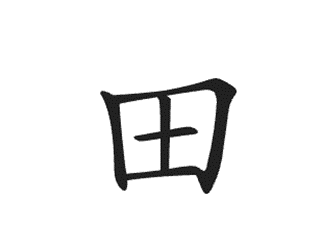
One evening, I know not why, he grabbed a pencil and a piece of paper and sketched a box with lines intersecting at its centre. He explained that it meant field, which produced lightly amazed gasps from several members of his now attentive audience.
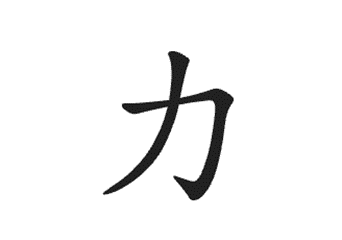
He then drew another, completely different character of just two lines, far more curvaceous and dynamic. Another lightly surprised gasp escaped some of us as, he revealed that its meaning was power or force.
What he then did took my breath away. He drew field once more, slightly smaller this time, and proceeded to attach a scaled down version of power underneath it. This new, composite character, he told us, grinning broadly, meant man.
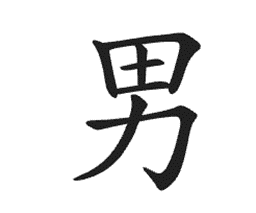
We looked quizzical. He explained. Man, he said, is powerful (indicating the bottom half) in the field (indicating the top half). Realisation dawned.
He went on to demonstrate a few more of these single characters, showing us how to combine them and create more intricate, conceptual meanings. One that I particularly enjoyed was where a roof was sketched above a pig. We must have looked utterly confused… “It means house” said Koji, patiently. Our confusion was unabated. He explained: in olden times, people would bring their animals in at night and have them underneath the house, thus providing protection for the beasts and warmth for the humans. Pragmatism; pictorially portrayed.
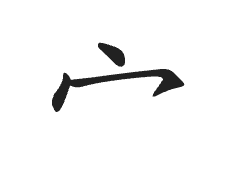
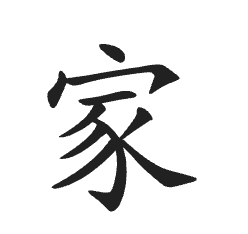
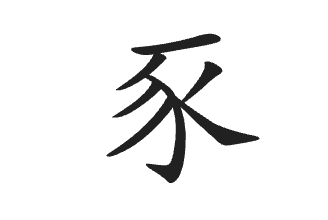
Roof, pig & house
The genius folded into these disarmingly simple creations immediately opened my eyes to what was all around me. Not that I could understand very much, but I could at least begin to separate them into component parts and get a simple grasp of how this ancient pictorial language is created.
Two years later, when I began my acupuncture studies in earnest, with Peter Yates in Tokyo, I was delighted to find that Peter shared my enthusiasm for Chinese characters, or kanji, as they are known in Japanese. Every single acupoint we covered was explained through its characters (usually two, occasionally three) along with the Chinese and Japanese pronunciations.
We thereby became recipients of a deeper dimension of knowledge than many of my fellow students, who had not made the trip out to the East, a dimension I have always been profoundly grateful for. It is a gratitude which I gladly pay forward to all of my students and many of my patients. If I tell my clients that a point on the wrist is on the Heart meridian, a swathe of knowledge opens in their inner world. If I tell them the point is called Gateway of the Spirit, those inner worlds proliferate and expand exponentially.
One of the most exciting features of Chinese characters is how they subtly change their meaning when combined and placed in compounds with other characters. Remember, most characters are already composite in their basic structure, which provides an innate flexibility to their meaning. Combining one composite pictogram with another, creates a pregnant blend of significance, whereby a single meaning is often very difficult, if not impossible to pin down.
An amusing example of this is the combination of hand and paper. In Japanese, this means writing paper. In China, it means toilet paper… Worlds of meaning, indeed!
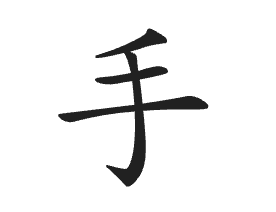
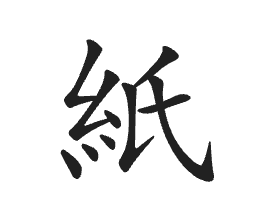
Hand & paper
The article you are reading can be seen as a tribute to the vast body of knowledge, the limitless tradition we call Chinese or Oriental medicine. It is also a tribute to the genius, both poetic and pragmatic, embedded in the written Chinese language. I am not a sinologist. Neither am I fluent in Chinese (or Japanese these days, alas!) I have a skimpy knowledge of the Chinese language and cannot lay claim to the learning that scholars of Chinese culture, history or indeed medicine may justly claim for themselves. I did, however, learn certain Chinese characters as part of my studies, and embraced that part of the knowledge as an integral and valuable part of the whole.
The Significance of Point Names
Why are the names of the points so important?
Well, for one thing, the Chinese did not number the points; they named them. This should tell us something and give us cause to ponder. If they took the time to name them, might there be a reason they did so?
Might there be information encoded into these names that would be of use to us in our wielding of them in treatment, in self-treatment, in Qigong and meditation practice?
Might there be significance in point names such as One Hundred Meetings (GV 20), Yin Crossing (CV 7), Yang Crossing (GB 35), Three Yang Connection (TH 8), Three Yin Convergence (SP 6), Wind Palace (GV 16), Great River Valley (KI 3), Receive the Mountain (BL 57) and the multitude of other points covering the entire surface of the human body? Might they be signposts laid out for us, anatomical, physiological and metaphysical hints that we might learn from and intuit meaning from?
It is my firm belief that this is precisely why the Chinese named the points, and it is my intention to lay bare as many layers of meaning as I am able in this short text.
Meaning Augmenting Meaning
Let us now return to the innate complexity we observed within the meaning of Chinese characters, as we juxtapose and combine them. Sometimes, we see contrast, such as Yin Spring at the Mound (SP 9) and Yang Spring at the Mound (GB 34), in equivalent positions on either side of the knee (the mound in question). We see humour in the name Jump and Circulate, (GB 30) a point just behind the trochanter in the buttock area – stimulation of this often highly sensitive point can cause both reactions in equal measure.
At times, we see meaning augmenting meaning, such as in Clear and Bright (BL 1), a point near the eye, and Luminous Brightness (GB 37), a point distal from the eye but on a channel well known to benefit vision.
Great Surge (LV 3) a point on the foot, is well known for dislodging painful Blood stagnation that can cause both headaches and menstrual difficulties. It also removes painful blockages from around the Heart and is a great catalyst to creativity. Shoulder Well (GB 21) can move stuck energy, and thus pain and stiffness, powerfully downwards from the shoulders and deep into the abdomen and pelvic region for circulation and recycling. And so on and so forth.
Some of these points seem to have several different aspects to their personality. This may seem slightly strange at first, but the moment we consider how many facets a normal person has to their character, the mystery at once fades to mundanity. Naturally, some of these points, the really big ones, have several components to their functional personality. The opposite would be absurd indeed, would it not?
An example: Bladder 11, Da Zhu, the Great Shuttle, high up on the back, is a widely disregarded point.
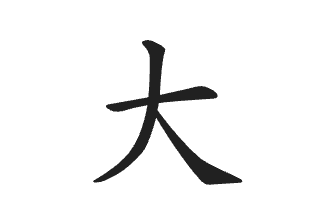
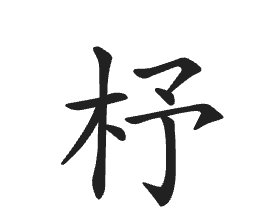
Da Zhu, Great Shuttle
I believe this is mainly because it is dwarfed by its local cousins, the Shu points. Those well-known and highly versatile acupoints run alongside the spine, starting just below Da Zhu and continuing all the way down to the sacrum, each bearing the name of one of the twelve main meridians.
The Great Shuttle2, however, remains cloaked in anonymity, until we discover three astounding things:
- 1) It is the influential point for bones and skeleton. Hmmm, interesting. Could we treat bone disease, joint degeneration and issues related to Marrow with its help? Possibly.
- 2) It is the upper point for the Sea of Blood. Intriguing… Might this be a useful point for any and all illness relating to Blood, menstruation and circulation? It just might.
- 3) It is one of the should-be-very-famous Dragon points, as in the three point-patterns for flushing out nasty stuff with the help of downward propulsion through the meridians.
This point provides a clear, if somewhat extreme, example of how an acupoint can seemingly behave in completely different ways. Naturally, there are lines of connectivity to be drawn between these spheres of influence, but they do not become obvious until we start to pay attention. Might the name of the point even be an indicator of this: The Great Shuttle…?
Acupoints: Three Examples
Acupoints are small places on the body that have been described for several millennia with an impressive degree of uniformity. In the West, they are numbered and named after the meridians they lie along and the bodily organs they eventually connect with. In the East, they each possess individual names and some of them are mightily suggestive. Just for example, let us name three: Spirit Gate (HT 7) Room of Perseverance (BL 52) and Great Surge (LV 3).
Spirit Gate is on the Heart meridian and lies on the wrist crease, near the ulnar bone. Room of Perseverance is in the lumbar area on the back, and lies on the outer Bladder meridian. Great Surge is a Liver point on the foot, in the flesh just up from the big toe and in between the metatarsals.
I chose these three points at random, simply for the effect their names create in the imagination. Heart 7, Spirit Gate, is often employed in the event of mental, emotional or spiritual fatigue, confusion and weakness. Room of Perseverance, Bladder 52 is most often used as a support point in chronic lumbago. Liver 3, Great Surge, is commonly used for situations where too much tension in the body is causing symptoms such as headaches, menstrual discomfort or high blood pressure.
That’s a pretty impressive start, I think many would agree. It is, in fact, merely the tip of a very deep and mighty iceberg. What we just did was look at a few of the typical types of pathology these points are commonly used to counteract. If we look beyond pathology and instead explore function, we will discover the infinite realms these points lead us into.
1. Spirit Gate (Shén Mén)
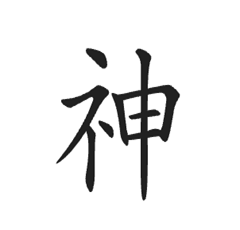
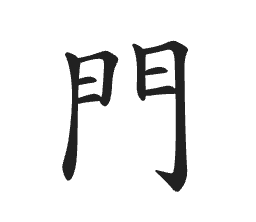
Shen Men
Heart 7, Spirit Gate, is called Shen Men in Chinese. While “Men” means gate or portal, “Shen” is the name given to the particular spiritual frequency or band of frequencies associated with the Heart and the Fire phase within the model of Five Phase dynamics. It denotes a highly ethereal set of vibrations that encompass everything from mind through memory to mental acuity and far beyond. Given that this is the case, the following story will not be surprising.
A woman complains of poor skin, bad hair, terrible relations with her mother and a host of bothersome life trials. She is treated in a relatively symptomatic fashion, from which fair to middling results are the yield. After a few treatments, the therapist decides to be a tad bolder. Lightly grasping his needle, he approaches the lady’s wrist, where Shen Men lies, innocently waiting. He places the tip of the needle on the crease next to the ulnar bone and, on the out breath, swiftly inserts the needle. There is a momentary pause then a momentous explosion.
What happens next is that the woman leaps up off the table. Wrenching the puny needle out of her arm, she grabs her clothes and, crying, storms out of the building. The therapist is left, baffled and unpaid, wondering what just happened. Many weeks later, she returns. Her hair looks great, her skin is glowing. She has spoken to her mother and ironed out a few kinks in their relationship. She is smiling and apologetic. She is also thankful and at pains to pay her bill in full. The therapist in question is rewarded with a story to pass on to future generations and a fist full of lessons learned: Do not underestimate the power of the needle, the might of pent-up spiritual frustration or the self-healing mechanisms residing on every single level of the human being – and housed in these miraculous micro-worlds known as acupoints. Ever.
The therapist in question was the late and great Peter Yates, my teacher, mentor, colleague, gong fu partner and friend for ever.
2. Room of Perseverance (Zhì shì)
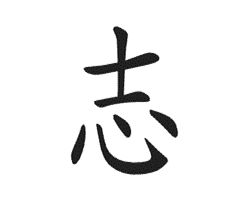
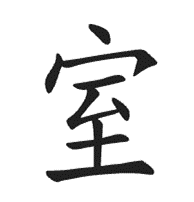
Zhi Shi
Let us now turn to Bladder 52, Room of Perseverance.
The point was taught to me way back when (by the above therapist) as a supporting point for chronic lumbago. Fortunately, I was not only infernally curious but also curiously intrigued by the Chinese characters employed in the names of these points. Looking at a meridian chart of the back one evening, I located the point down at the level of the lumbar – at the level of the Kidney back Shu point on the waistline, slightly further out and just below the ribs. The location explained the lumbago part well enough, but that was only the beginning.
Considering the first word in the name: Zhi, something compelled me to look up its meaning in my dictionary: Will, persistence, perseverance… Eureka! These qualities and propensities I immediately recognized as pertaining to the psycho-spiritual aspects of the Kidney meridian.
And what about this second, parallel line on the back, slightly further away from the spine upon which it is located? Let us take a closer look. The closer you look, the more you see. Is that not so? What did I see as I traced the outer line upwards towards the portion of the back between the shoulder blades? The word Shen leapt out at me. Shen as in Spirit, as in the set of ethereal vibrations described above. Interesting… Checking the other points on the same line, all five of the psycho-spiritual qualities relating to the five elemental energies emerged. In descending order, they are: Po, Shen, Hun, Yi and Zhi. Well, well, well, well, well!
From that day onwards, Room of Perseverance ceased abruptly to be a support point for chronic lumbago. It became the primary point for boosting the morale, the will to continue, the power of perseverance in people who came to visit me. Open your mind for a moment and ask yourself how many people and situations this might be useful for… Burnout, anyone?
3. Great Surge (Tàichōng)
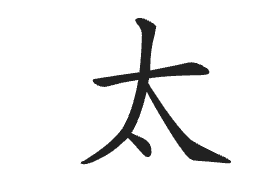
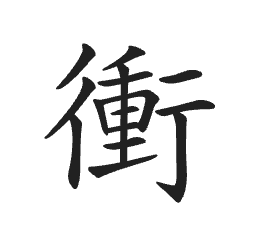
Tai Chong
Turning to Liver 3, Great Surge, we see parallel worlds unfold in the form of a point located far, far from the head – seat of awareness and home of consciousness, according to some.
Great Surge is called Tai Chong in Chinese. Tai means not only big but massive, huge, vast. Let’s call it great. Chong means original thrust, deep circulation, embryonic momentum. Rushing is a word some use to encompass all of this. Fine by me. My own personal image of what it means is symbolized by the “Redrum” scene from The Shining: pulsing, welling, surging, dam-busting floods of Blood.
This point was once employed inappropriately by a student of mine: she used it on an anemic young man, who proceeded to almost pass out. Her mistake was not solely in its use per se – she used it as the first point in the treatment. Lesson learnt, she told the class, and we agreed that she would probably not be using that point on anemic people as a first point of choice ever again. It is simply too strong.
As noted above, it alleviates pressure, but if the pressure is already way too low, then it will have an adverse effect. When I now inform you that it is a highly effective point in boosting the Blood, you will then object that the point should then be an optimal one for anemic conditions. Indeed. However, it is too strong on its own as a first point, since it initiates colossal amounts of movement. It requires stabilizing points first, so that the system can assimilate the stimulus intended for the augmented surge of Blood.
So, Blood. Hmmm. Now that’s an intriguing word to throw around, isn’t it? What do we mean by Blood? Certainly, we imagine a thick red liquid coursing through the circulatory system and passing through the Heart. More than that, however, we envisage a deep source of nourishment that provides support to structures all over the body, and able to provide enough physicality to house not only the aforementioned Shen but also the Hun.
And what might Hun be? It is imagined as an ethereal, spiritual energy that pertains to the Liver and Gall Bladder meridians and the Wood element. It implies the ability of a human being to project a course through life and continually re-evaluate that course in a creative fashion. To aid in this re-evaluation, the Hun provides vision, dreams and imagination. The Chinese draw Hun as a spirit that floats on the clouds… permanently impermanent. My own version of Hun travels on a magic carpet. I always loved that Aladdin story.
Applying this to Liver 3, Great Surge, we therefore anticipate that it will not only influence the Blood but also the Hun. Vision implies sight and yes, Liver 3, Tai Chong, is often associated with treatments for sight impairment, but here we are referring also to inner sight. We have in mind the ability of a person to see things from inside: to visualize. Some even go so far as to claim that Liver 3 can have a beneficial effect on the Third Eye.
Distal Relations and Group Connections
What have we learnt through this random (I promise you) selection of three points scattered across the surface of the body? We have learnt that the points are distinct from each other but partake of distal relations towards each other. They are connected by geography and by function. They are connected on levels ranging from mega-physical to extremely ethereal. They create networks and facilitate integrity, by allowing functional spheres severed by chance and circumstance to realign.
Are there other connections we have not yet named? The answer is yes. They are many, myriad and multitudinous.
I will name only one before signing off: point groups. To what am I referring? I am referring to an intriguing facet of Oriental medicine that is all too often sadly neglected. The points are grouped into categories. We have partially described one of these groups already. I call them the Spirit points and they run down the outer Bladder channel on the back, parallel with the spine. There are five of them and they are named after the psycho-spiritual aspects of the five elemental phases. In descending order, from upper back to lumbar, they are:
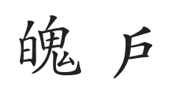
BL 42 Pò hù (Metal/Gold)
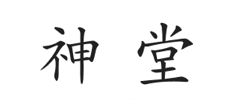
BL 44 Shén táng (Fire)
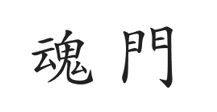
BL 47 Hún mén (Wood/Tree)
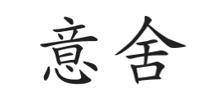
BL 49 Yì shě (Earth)
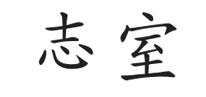
BL 52 Zhì shì (Water)
You might be curious to know the English names of these points, and I would be more than happy to oblige you: Po He, or Door of the Po, is level with the Lung back Shu points, high up on the back. Shen Tang, The Hall of the Shen, lies next to the Heart equivalents, slightly lower down. Hun Men, Hun Gateway, sits comfortably next to the Liver back Shu points, Yi She, Abode of the Yi, beside the Spleen’s ditto and Zhi Shi, Room of Perseverance, all the way down next to the Kidney back Shu points.
This short list of names suggests two types of entrance (Door and Gateway) as well as three varieties of enclosed space (Hall, Abode and Room). This, in itself, opens yet another pathway into the internal workings of Oriental medicine and the human alchemy of being, but we will have to tread that path together on another occasion.
For now, I would like to round off with an appeal to the curiosity of the reader. In my classes and in my treatments, the names of the points evoke realms of space, vivid imagery and even geographic accuracy. I find that they activate the imagination and thus the healing propensities of clients, as well as the visionary and healing capacities of students in equal measure.
They are a tool that I could not imagine being without, and I encourage any who are intrigued to pursue their study of the point names. This can be done whimsically and at random, or systematically in a formal, schematic way, depending on one’s specific needs and personality traits. Anything in between is both useful and reasonable.
As an aid to such study, I am currently preparing a book called Doors to Infinity for publication. It will describe a couple of hundred points – the ones I use most frequently – in as much detail as my experience and learning permit. It is an attempt to bring life to the often abstract world of acupoints, through the poetry and pragmatism of the point names and the uses to which I tend to put them. It is also an exploration of the three Meridian Families (frontal, middle and dorsal), as well as the Great Meridians (Tai Yang, Shao Yang, Yang Ming, Tai Yin, Jue Yin and Shao Yin).
It is my belief that placing the points into the sublime symmetry and perfect geometry of these meridian structures not only simplifies study, but brings to life otherwise hidden aspects of the meridian system and the magical potential housed in the human being.
Note
1 A shuttle is a tool used in weaving with a loom. It is designed to compactly store a holder that carries the thread of the yarn. Shuttles are either thrown or passed back and forth through the shed, between the threads of the warp in order to weave in the weft.
Author
- What’s in a name: tsubo’s, name or number? - 24 November 2026
- Shiatsu in times of turbulence - 9 October 2025
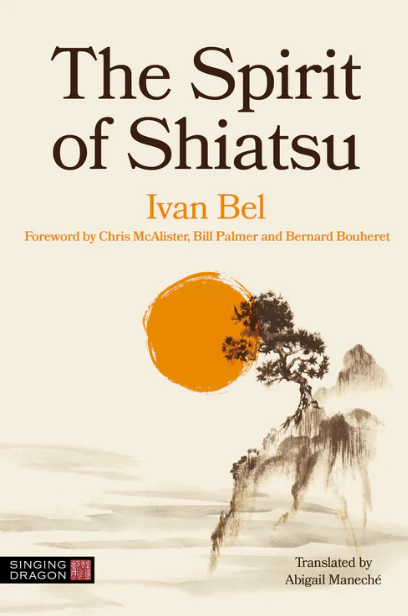
- Book: The Spirit of Shiatsu - 9 January 2025
- Shizuto Masunaga: his way of diagnosing – part.3 - 31 May 2023
- Shizuto Masunaga (part 2): His Creation - 9 January 2023
- Shizuto Masunaga (part.1): a genius on shoulders of giants - 6 October 2022