
In the first part, we discussed the roots, foundations and principles of Clean Language, a communication method used in therapy and coaching. Instead of using complex, technical language or metaphors, it involves simple, gentle questioning about how we feel and what we experience. In this second part, the author continues her exploration of Clean Language by proposing a series of basic questions and attempting to define the limits and possibilities of this method.
Basic Questions at a Glance
- And is there anything else about X?
This question encourages the client to look more closely at the topic and to follow chains of associations.
- And where exactly is X?
This question draws attention to the part of the body where the issue is reflected or, if necessary, to its position in space.
- And X is like what? Or: And what kind of X is X?
This is about a metaphor for the issue, a symbol in which the various facets and meanings of the issue are condensed. The metaphor brings closer to consciousness what is more vaguely hidden in the body’s sensations.
- And if X, what would you like to have happen?
This question focuses on the needs and possible solutions.
- And what would that be like?
This question makes it possible to anticipate solutions in the imagination and also in body awareness. This alone can bring about a change in body energy and be healing.
- And what happens next?
This question can take us a little further in our exploration of the issue.
Possibilities and Limitations of Clean Language
Every person – at least according to constructivist philosophy – perceives the world in their own personal way, “constructing” their reality. Their unconscious focuses on what is important to them and structures what they perceive in a very individual way.
It is this point of view that underlies the great respect for the client’s view of the world in Clean Language and for the therapist’s restraint in making his or her own interpretations.
And this respect is necessary in order to create a safe space in which the client can relax and focus on their own issues without having to be constantly on guard against unsolicited comments and interventions. Relaxation, as we know, saves energy for more important things and allows attention to turn inwards.
Because the therapist does not intervene in what is happening, only as much comes to the surface as the client can cope with. Some things remain hidden, others are allowed to remain at the level of images and can be set in motion there without fully reaching the conscious mind. All of this explains why Clean Language proves to be so helpful in trauma therapy. Unlike with traumatic events themselves, control over what is going on remains entirely with the client.
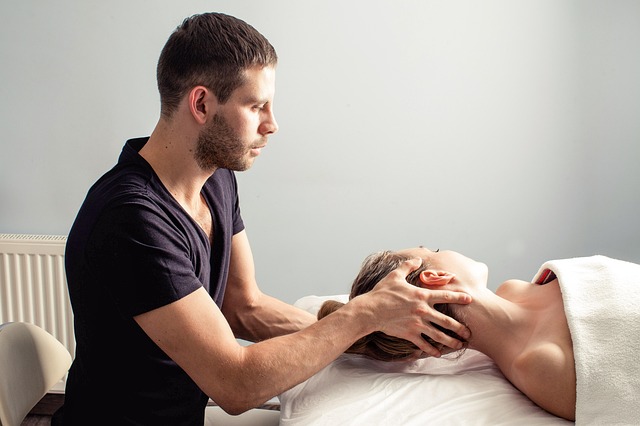
Trust is a prerequisite for the success of therapeutic processes and human encounters in general. Trust arises from the certainty that one’s own boundaries, needs and perspectives are respected and from the experience that the two partners are on the same wavelength in at least one area. In Shiatsu, this arises from the fact that the two partners resonate with each other energetically. In Clean Language, this is achieved by the therapist attuning to the client’s choice of words, emphasis, gestures and facial expressions. In this way, Clean Language can contribute to the development of a trusting, relaxed and fruitful relationship between the dialogue partners.
The therapist’s confidence in the client’s ability to self-regulate has a direct effect on the clients. They experience how self-effective they can be when they develop their own solutions without help. Their self-confidence grows and their courage to take things into their own hands increases.
Where is Clean Language Used?
The areas of application are many and varied.
- In coaching, it helps to clarify goals and solution strategies.
- Teachers use it to help students find their own creative solutions and also for conflict discussions.
- Clean language is also an important tool for managers in appraisal interviews. It can contribute to a respectful working atmosphere and be useful for organisational development.
- Some questions from Clean Language can also be used very well on their own for self-exploration. I often get this feedback from my clients.
- Clean Language can be used well in psychotherapy to initiate developments and facilitate problem solving at the level of symbols and metaphors. Clean Language has proven to be particularly helpful in dealing with anxiety, depression and trauma.
- I myself am at home in bodywork, more precisely in shiatsu. The appeal of Clean Language for shiatsu therapists lies on the one hand in the similarity of the approach. Shiatsu is also primarily about opening up spaces for self-awareness and self-regulation. In addition, Clean Language uses language to bring what is happening closer to consciousness. Shiatsu therapists generally have no psychotherapeutic training. With a few simple questions and the appropriate attitude, Clean Language gives them the possibility to accompany things that come up during treatment without making excessive demands on themselves or the client.
Like any method, Clean Language is not a panacea. In my work, I encounter numerous situations where it makes little sense to use Clean Language.
- I regularly give shiatsu treatments to people with severe physical and mental disabilities. Most of them have limited or no language skills. Questions such as “And is there anything else about X?” or “And what would you like to have happen?” are often of little use to them. They either don’t answer at all, say “I don’t know” or answer with a stereotype that doesn’t fit the question, such as “There’s no power cut today”. Clean Language questions are rarely appropriate here. The question “Where should I put my hands?” is more likely to focus their attention inwards and on their own needs. If they can’t speak, they guide my hands. And the mindful, unintentional basic attitude of going with what shows up energetically is as indispensable here as in Clean Language.
- Not many people are in good contact with themselves, with their own needs and body sensations in the current, more externally orientated culture. Clients who are new to Clean Language often give us a blank look when we ask them “And where exactly is X?” or “And what would X like to have happen?”. Perhaps they are not at all ready for a conversation and simply want to be left alone while we do our work and free them from their symptom. The only thing we can do is make offers like: “Would it be okay if I asked a few simple questions? It is certainly up to you to decide whether the questions are appropriate or whether you want to answer them at all.” And then it makes sense to ask only a few questions at first.
- Some topics of conversation involve facts that require expert knowledge. Although a respectful approach and some open-ended questions are useful in this case too, the client often wants to hear my opinion and needs information or advice. If the car won’t start, then the information “You need a new battery” is more helpful than the question “And what would you like to have happen?”
- Some clients are stuck in negative, problem-focused beliefs and thought patterns. Open-ended clean questions might just leave them in their spiral of thought. This also needs to be accepted. Conscious acceptance alone can relax the atmosphere. The therapist is less in danger of tilting at windmills and the client feels accepted for who he or she is. Nevertheless, offers that liquefy the situation can be an act of love and responsibility. Psychotherapy offers a variety of paths from which we can draw inspiration or which we could perhaps even pursue further.

For example:
- Question about an exception: “I always get everything wrong” – “And is there anything in your life that has worked out quite well?” Or: “And how did you manage to be here on time today?” “I just can’t remember the English vocabulary. English is not for me.” “And which English word do you already know?”
- Giving things a different meaning, putting them in a different context: In psychotherapy, this method is called reframing. In Focusing, a method related to Clean Language, clients are sometimes asked: “And what is the worst thing about it?” and then: “And what is the best thing about it?” This can certainly cause irritation, because what is supposed to be good about a slipped disc or a separation? However, if used carefully, it can open a view to the brighter side of the problem. One of my clients was once very bothered by a painful shoulder. When I asked her what the best thing about it was, a mischievous smile flitted across her face and she said: “I have a window cleaner now!”
Another client complained that she was never able to spontaneously speak out loud, to express her needs or start an argument. My statement “Yes, you are very considerate and you certainly don’t need to sweep up broken china all the time.“ showed her the competence in such a rather introverted trait. - Related to reframing is the approach of the Austrian neurologist and psychotherapist Viktor Frankl. As a psychologist, he survived the concentration camp and his horrific experiences led him to believe that suffering is inevitable, but that we always have a choice about how we relate to it and what meaning we give to it. He himself was kept alive by the idea that it was his task for the future was to give lectures about the effects on the psyche of being in a concentration camp. He later developed logotherapy, which aims to help people find meaning and value in their lives and also in individual difficult or painful situations. The question “WHAT FOR?” is very important in this context. To what end is this stressful event challenging me? What does it inspire me to do? In this way, the client may be able to discover a meaning for themselves and the whole event may appear in a new light.
- And then there are cases where people find themselves in severe, overwhelming crises or where they do not have the strength to face a situation without active support. Here it is no longer a matter of asking questions, but of acting to the best of one’s knowledge and belief. Even what appears to be an intrusion can be an act of love and of a willingness to take responsibility, knowing full well that mistakes can be made. Doctors know such situations well enough. In the case of a heart attack, you can’t ask lengthy questions about what the patient would like to have happen. But even bodyworkers, psychotherapists or friends are sometimes faced with the task of preventing people from harming themselves or others, or of giving decisive advice in difficult situations.
What is important in all of this?
What Clean Language brings to a conversation is a focus on mindfulness, non-intentionality and Zen-like minimalism in the way we ask questions. This is a great gift. Deciding when and how to use this gift, requires compassion, love, pragmatism and connection to a wisdom beyond ourselves.
“Somewhere beyond right and wrong, there is a garden. I will meet you there.” says the Persian poet and mystic Rumi. I am looking forward to meeting many people in that garden who, full of enthusiasm and equanimity, will engage in experiments, mistakes and new experiences with Clean Language.

Author

- Clean Language in Bodywork – part 2 - 19 May 2026
- Clean Language in Bodywork – part 1 - 13 April 2026
- Do you know my mother? Shiatsu for people with complex disabilities - 12 January 2026