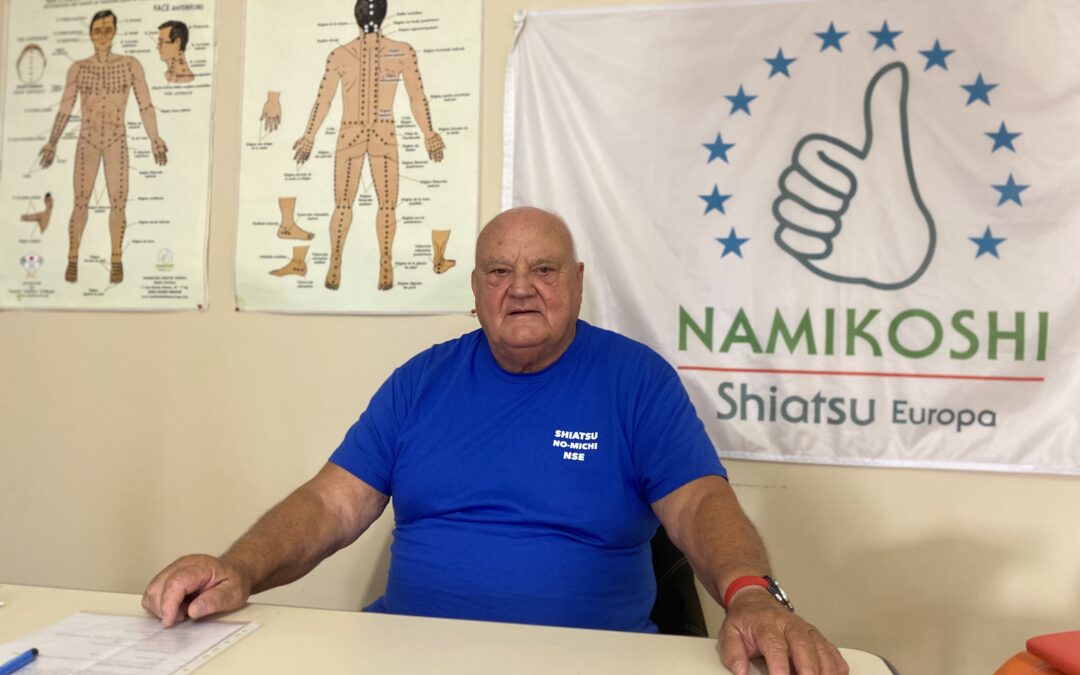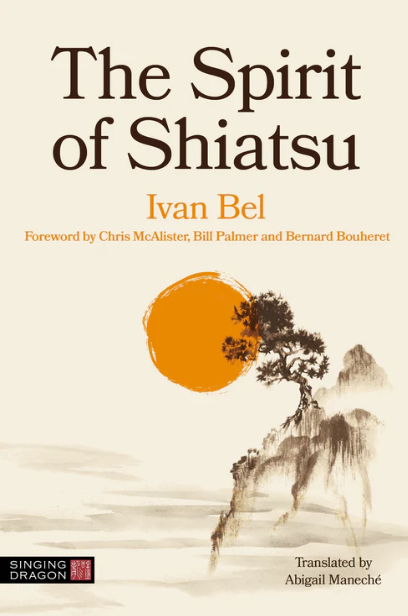

The art of Shiatsu, this Japanese practice of massage and acupressure, before being a profession, is a practice that we often anchor in our daily lives. It is also, for most practitioners, the breeding ground for their experience, the testing ground of their practice. What Shiatsu brings us is projected far beyond our cabinets. The appropriation of cultural concepts such as wabi-sabi, mono no aware and shojin can enrich the subtlety and balance of our daily life especially when they infuse Shiatsu into our family and everyday experiences. Our eating, gestural, emotional and cognitive habits evolve strongly under the influence of our learning and practices.
Wabi-Sabi(侘寂) : The beauty of imperfection and simplicity

Wabi-Sabi celebrates the beauty of imperfection, impermanence and simplicity. It is difficult to bring a literal translation as this concept is subtle. This philosophy invites us to appreciate things as they are, marked by time or imbued with authenticity.
In Shiatsu, this perspective offers a gentle approach, respectful of body and mind, without seeking to force healing.
The links between Wabi-Sabi and Shiatsu:
- Simplicity and presence : Shiatsu, just like Wabi-Sabi, encourages a connection to the essentials and to the present moment. Every touch then takes on a meditative dimension, where mindfulness takes precedence to open the way to resonance.
- Acceptance and progressive healing : Like wabi-sabi, which values imperfections, Shiatsu accompanies the body in its imbalances and its search for adjustment, favoring a state giving way to the process of natural transformation.
- Energy and nature : Wabi-sabi promotes the cycles of nature. Similarly, Shiatsu supports the flow of vital energy (ki), recognizing and respecting the constant transformations of human beings.
Mono no Aware (物の哀れ): A sensitivity to impermanence

Mono no aware – literally, “the emotion of things” – expresses a soft look at the ephemeral life. This concept invites to deeply feel the fleeting moments, accepting them as a precious part of the human experience.
Connections between Mono No Aware and Shiatsu :
- Appreciation of the present moment : In Shiatsu, each pressure and each release is an invitation to be fully anchored in the moment, like mono no aware, which honors the fragility of each moment.
- Acceptance of emotions : Mono no aware celebrates the emotions that accompany the consciousness of impermanence, whether joyful or tinged with sadness. In the same way, Shiatsu makes it possible to express and release the emotions retained in the body, by welcoming them without judgment.
- Interconnection of energy and life : Just as mono no aware links to the changing nature of things, Shiatsu reveals that vital energy is a dynamic and precious flow that evolves over time.
Shojin (精進) : Devotion in daily gestures

Shojin, or ‘sincere effort’, largely linked to the two previous concepts, encourages full presence and pure intention in each gesture, even the most banal.
In daily tasks, this philosophy invites discipline, simplicity and a search for harmony in the execution of gestures.
Shojin and Shiatsu on a daily basis:
- A conscious kind of care : Inspired by shojin, Shiatsu can become a moment of devotion, where every touch is made with attention and respect, creating a conscious and soothing practice.
- Harmony in everyday life : By integrating shojin, even the simplest family moments can become connection rituals, where the sincere intention transforms each gesture into a harmonious experience.
A way of life
By immersing itself in the philosophies of wabi-sabi, mono no aware and shojin, Shiatsu becomes much more than a therapeutic method. It is transformed into an art of living, valuing simplicity, the acceptance of impermanence, and the attention paid to the present moment.
In every pressure and in every breath, Shiatsu invites us to slow down, feel and cultivate an inner harmony, in resonance with the natural rhythms of life, of the family. A practice that, beyond technique, celebrates the beauty of authenticity and human connection.
Author

Translator