At a time when some reject any spirituality in Shiatsu and others take it towards multidimensional dimensions, Bernard Bouheret offers a balanced perspective, the fruit of over 40 years’ practice of Shiatsu and meditation. He invites us to explore the place of spirituality in Shiatsu, by sitting quietly and meditating on this essential aspect.
Article published in La lettre du shiatsu 21 printemps 2025, by the International Association of Traditional Shiatsu (AIST)
‘Give more than you can take back.
And forget.
Such is the sacred path’.
René Char
In this article, you’ll find some of the ideas I put down on paper 10 years ago. I felt it was important to take them up and refine them to make them accessible again today. I hope that these reflections will find their way into your practice, and that this text will give you a taste for sitting in peace.
At a time when some would like to deny any spirituality in the practice of Shiatsu, and others would like to see it move into completely mind-bending, multidimensional spheres, it occurred to me that it might be time to set things straight and share my experience of over 40 years of practising both Shiatsu and meditation.
Perhaps there’s a middle ground here that’s worth pausing for a moment, to sit back and meditate – the word is apt – on this aspect. The question deserves to be asked, and it could be stated as follows:
Should Shiatsu and Spirituality go together?
In the light of what has just been said, a great doubt suddenly arose in my mind: did I have the right and the legitimacy to pass on the concepts that were dear to my heart and through which I had already been practicing for many years?
A great silence fell over me, I sat down, the spirit of meditation came as usual and I saw things settle.
An inner voice spoke: ‘Go back to the sources of this medicine and you’ll see that everything is clear’, it said.
The source was the Su Wen, the acupuncturist’s bible, and its first 11 chapters, in which Qi Bo answers the questions of Huang Ti, the Yellow Emperor, and which I’d like to comment on with you.
In Chapter 1 of Book 1, entitled ‘On Natural Purity in High Antiquity’, Huang Di questions Qi Bo. Huang Di questions Qi Bo, who replies:
‘Following the Dao, the ancients aligned themselves with Yin and Yang…
They were moderate in their diet, avoided overwork, and were careful not to damage their bodies and minds, allowing themselves to live for a century.
Today’s people don’t act the same way, they drink alcohol, are reckless and lustful…
The sages of ancient times taught everyone to avoid the perversions of exhaustion in good time, and to maintain their natural breath in docility through calmness and concentration, to keep their minds well-contained inside so that illnesses would have no hold.
Thanks to the restriction of appetites and the ‘restraint of desires, the heart remains peaceful and untroubled, the body works without exhaustion, the breath follows a regular course and each of them is satisfied…’.
Chapter 3 states: ‘Peace of heart, confirming the serenity of time, maintains the firmness of Yang and renders external perversions harmless, however pirate they may be. According to the calendar, the Sages submit their own vital breath to the celestial breath and thus bring it into continuity with the Spirits.’
How can we cultivate the peace of heart that prevents even climatic attacks? How can we submit our vital breath to the Breath of Heaven?
How do you enter into continuity with spirits?
Is it still relevant? Is it interesting for a caregiver?
This is where the inner work begins, and where meditation takes on its full meaning.
Indeed, no practitioner, however skillful and efficient, can ignore this inner work from which he draws his strength, his calm and his presence, where everything seems to be suddenly absorbed by the depth of the interior.
The wisdom of Qi Gong suddenly resonates: ‘We hear without listening, we see without looking, we accomplish without acting, we feel without touching…’
If it’s still medicine, it’s even more of a medical art, an ancestral art of living, the art of nourishing life (Yang Sheng Gong)!
But how do we access these inner spaces, and why do it? What is the connection between healing and meditation?
Should we respond in Woody Allen’s facetious way: ‘ There is no doubt that there is an invisible world. But how far is it from the city center, and how late is it open?
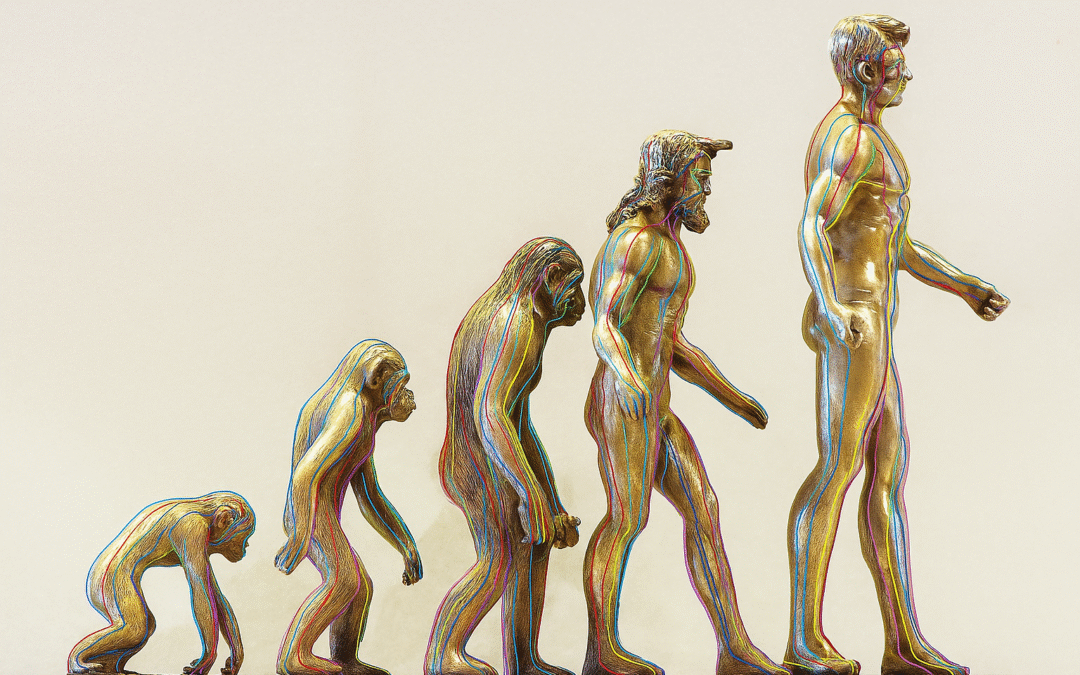
Nobody knows how the science of acupuncture’s (invisible) meridians came about, but one thing is certain: the points and paths were not discovered empirically – the system is far too complex for that. Some believe, and I’m one of them, that everything was seen from the inside by the Masters of high antiquity, and has been since time immemorial.
And this is already recorded in the famous Su Wen.
The same is true of India, with its 72,000 nadis! Ida on the left, Pingala on the right, each providing 36,000 nadis, and the central vessel Sushumna, which so closely resembles the Conception Vessel (Ren Mai) of Chinese medicine.
The masters of the Upanishads are called Rishis, Seers, those who had access to clairvoyance and pure consciousness.
‘ Tat Twam Asi ‘: you are That! Not this body of flesh and blood, but this body of breath, untouched by the ravages of time. Anything subject to time cannot be real!
The feather body of Qi Gong, the subtle body of the Tibetans, the rainbow body of the Aborigines, the body of glory of the Christians. Shiatsu’s hand of breath.
To inhabit this body is to think the universe!
This is why the Su Wen speaks of antiquity as a blessed time when the Sages were kings of the world. This world is not remote in time, but deep within each one of us, and therefore at some distance from the worldliness of all times. There has always been the worldly, turned outward, and the wise, turned inward.
There’s something else that’s important to mention, and which all the sages have also brought to light, and that’s that every human being has a Lower Nature (Earth) and a Higher Nature (Heaven), and that the purpose of life is for this Higher Nature to draw the Lower Nature to itself. In the practice of Shiatsu, we soon realize that when access to this higher plane is not open, one essential thing is missing: joy! Joy as peace in motion!
As practitioners, we need to cultivate this joy because, in the end, patients (not clients) come knocking at our door primarily to encounter this joy, which may well lead them back to health. Even in the face of intense pain, the practitioner remains in contact with this profound joy, which is the territory of the inner calm cultivated during morning sitting. In the face of illness, suffering and the dramas of everyday life, the only way to remain stable is to remain aligned in this space of the heart. I’ve often called this ‘ Stable posture, steady hand, pure heart’.
When the Su Wen says ‘ Everyone is sick in his own way, and the doctor must always take this into account’, the ideogram can also be read as the sage (the wise doctor, for he is a man of reflection and interiority)*.
When Heraclitus, in the 5th century B.C., uttered the famous ‘You never cross the same river twice’, he grasped the impermanence of things, his mind turned inwards, and the Taoists called this ‘ The reversal of the gaze ‘.
Close your eyes on the outside, open your eyes on the inside, see with your ears, because they don’t have eyelids!
In all Dao Yin, Qi Gong and sitting exercises, we recommend this existential reversal, without which the discipline is doomed to mere superficiality and will not bring about any deep, lasting transformation.
But what does this have to do with us, Shiatsushi?
Turning our gaze inwards and sitting quietly opens up spaces in the body, then in the consciousness, and it’s in this same space that the patient will be welcomed, heard and understood. The manifest depth we create in sitting between the Self (inside) and the world (outer) will immediately be a space of welcome and compassion for the receiver in suffering or in need of well-being, balance and serenity.
It’s as simple as opening a window and seeing and feeling the outside air rush into the room and fill it completely.
And there, a new universe is perceptible that we can call ‘Healing within.’
*Note: The Latin root medicus means doctor. Originally, the Indo-European root med- expresses the idea of measure and order. We find it in words like meditate, moderate, module. The physician is therefore a man of measure and wisdom, a tradition we find in the Hippocratic oath. The ancient Chinese were not mistaken either. Medicine and meditation have the same root.
To embrace the other within
This is only possible through the body of breath (body of Qi) awakened by sitting meditation, Qi Gong, seen as meditation in movement.
Masunaga Sensei puts it very well, pointing out that this is the lifeblood of Shiatsu, its true essence, and that we don’t need a master in our practice; our patient is our only master.
Blessed is the one who could feel it! Masunaga is a master of Shiatsu!
Namikoshi Sensei was the first to speak of the Mother’s love, pointing out that the heart of Shiatsu is like the heart of the Mother, and that pressure on the body brings forth Life!
Okuyama Sensei of the Hakko (8th light) school, our venerable soke (founding master), founded the 8th light school, both martial and medical, asking us to work with the invisible force of ultraviolet radiation, that which is beyond the rainbow spectrum with its 7 radiances. Beyond violet is ultraviolet, radiation that is invisible but so powerful.
The old Taoist Zhuang Zi is clear:
‘The self is also the other
The other is also the self
When the self an the other no long opposite each other
That is the pivot of the Dao’.
What if we, as practitioners, were to become Taoists in the way Zhuang Zi invites us to? Then everything would be different: it would no longer be a matter of healing, but of encountering that other who would no longer be other, and whom we would feel within ourselves.
As the Zen monk Thich Nhat Hanh says, we should invent the verb inter-being, because we are constantly inter-being. ‘ No man is an island ‘ said the mystic Thomas Merton.
It’s an illusion born of identification with the physical body alone.
The spaces discovered in morning meditation are de facto available for this meeting of being with being. This is the ‘ I Shin den Shin ‘ of Japanese Zen.
From my heart to your heart I have erased the illusory distance of two separate bodies. Only the body of breath allows it!
Amazingly, in the 80s, as a young practitioner in my Montpellier practice, I perceived this magical encounter and was stunned by it, because I was too young to grasp all its sacredness.
I felt the other within myself, and my young practitioner’s body awakened a therapeutic clairvoyance which, without my knowing it, would later become a major diagnostic asset. The other was taking shape within me, and it was by looking inside myself that I perceived this other who was no longer an other. I didn’t have enough exprience to measure the significance of this, but it was already the seed of non-separation, and I’ve never stopped following this path and deepening it.
To meditate is to go to the center of oneself, to open the door to this mystery. It also means stripping ourselves bare, accepting and understanding that fragility is not weakness.
In a very prosaic way, we could also say that the space conquered by peace and silence is de facto available for care, and it’s in this place open to the inside that the patient’s complaint will be heard and collected.
Then one listens with earpieces…! And hearing becomes understanding.
The pressure that emanates from the heart
In the same way, we can affirm that every pressure emanating from the heart of the belly (Hara), when properly dispensed, is also related to the deep calm cultivated during meditation. This is reflected in the quality of the treatment, and there’s no mistaking it. Peace speaks to peace, for as Sri Nisagardatta Maharaj says, ‘ Only those who do not disturb peace deserve it ‘.
Any illness, any disorder is seen as a disturbance of deep peace; this is how the ancients perceived things, and we’ll repeat the sentence mentioned above: ‘ The sages of high antiquity taught everyone to avoid in time the perversions of exhaustion and to maintain by calmness and concentration their natural breath in docility, to well contain their spirit within so that illnesses are without hold ‘.
The message is clear: so when we give advice and recommendations to our weakened patients, let’s not forget to recommend a few minutes of quiet sitting in the morning … and also in the evening if affinity …!
As Mahatma Gandhi said: ‘ It’s the morning key and the evening lock’.
Want to escape illness? Don’t escape from yourself!
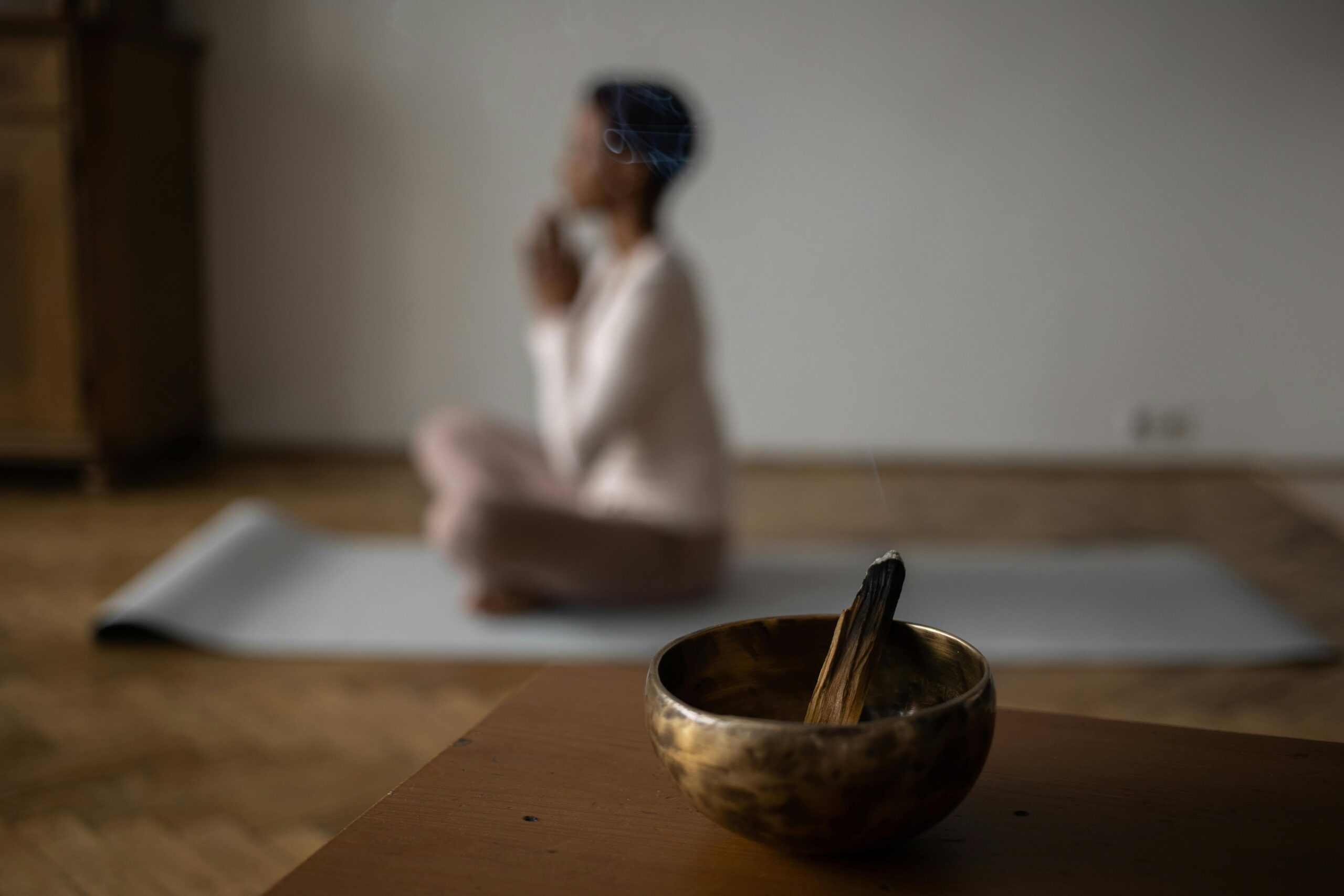
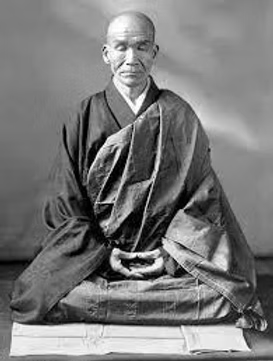
Once all this is accepted, make yourself comfortable and open your head to Heaven and feel the Earth beneath your feet, connecting with your breath as it comes and goes, trying not to upset it, which is no mean feat.
All sensibilities are welcome in the house of meditation: Zen, Chan, Tibetan, Indian Advaita Vedanta, Kashmiri Shiva, chanted prayers… It’s up to you to find your own sensibility in tune with the teaching: eyes open, eyes closed, eyes half-open, murmuring mantras or rolling your fingers on a mala… Everything is an excuse to focus the mind so that it lets go of its hold.
Then, once this has been done, the sense of our individuality disappears, so that we become people who are no longer people. Here, the future therapist will gain a great deal in presence.
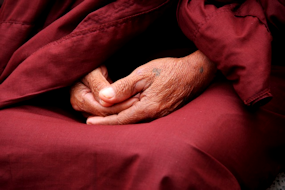
If you want to be a better therapist, you also need to be able to put down the books and ‘learn by body’, because ‘what you don’t understand in your body you won’t understand anywhere else‘, as the Upanishads say.
Meditation seeks Satva, the state of balance between torpor and agitation, between Tama and Raja as we say in India. Another way of talking about Yin/Yang, isn’t it? Once Satva has been established, a calm, stable and benevolent presence settles within us, and it’s with this same presence that we turn our attention to our recipient in the treatment.
Benevolence erases the sense of separation and becomes de facto compassion.
Clairvoyance will radiate like the reflection of the moon in a still lake, and whatever the problem to be solved, whatever the symptom to be treated, everything will be easier.
So let’s meditate. For ourselves, for others, for deep healing, for a lighter heart, for a calmer mind, for a replenished body, for all our emotions to flow more freely…
The Taoist Way, as clearly stated by the old sages, is this:
‘One must reach Heaven wihtout abandonning the Earth.’
This is what I try to do, kneeling on the floor, in my daily Shiatsu.
And then, if all goes well, I’ll hear that sweet melody that cradles my hands:
‘When my heart is at peace, there is peace thourough the world.’
‘Threefold is the rhythm of Life:
Taking, giving, forgetting oneself…
Such is the sacred path!
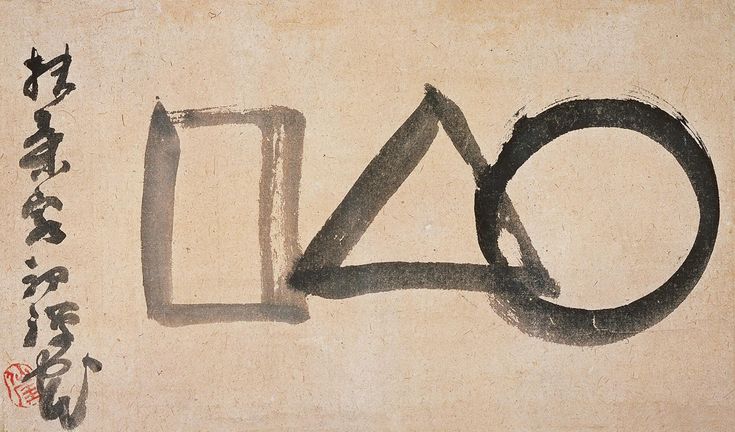
Author
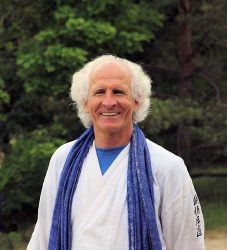
In 2002 he founded his own style, Sei Shiatsu Do (the way of sincere Shiatsu) and his own school, EST (École de Shiatsu Thérapeutique de Paris). Shortly afterwards, he also created the AIST (Association Internationale de Shiatsu Traditionnel) within which practitioners regularly go to practice and teach in Peru, Benin, India and Spain.
He has written 4 books on Shiatsu, including the "Vade Mecum" (Quintessence editions) considered as the "practical bible" of Shiatsu in France. He is currently president of the UFPST (Union Francophone des professionnels de Shiatsu Thérapeutique).
- Shiatsu and meditation - 22 September 2025
- The Meiken effect in Shiatsu – part. 3 - 15 May 2023
- The Meiken effect in Shiatsu – part. 2 - 30 January 2023
- The Meiken effect in Shiatsu – part. 1 - 25 November 2022
Translator