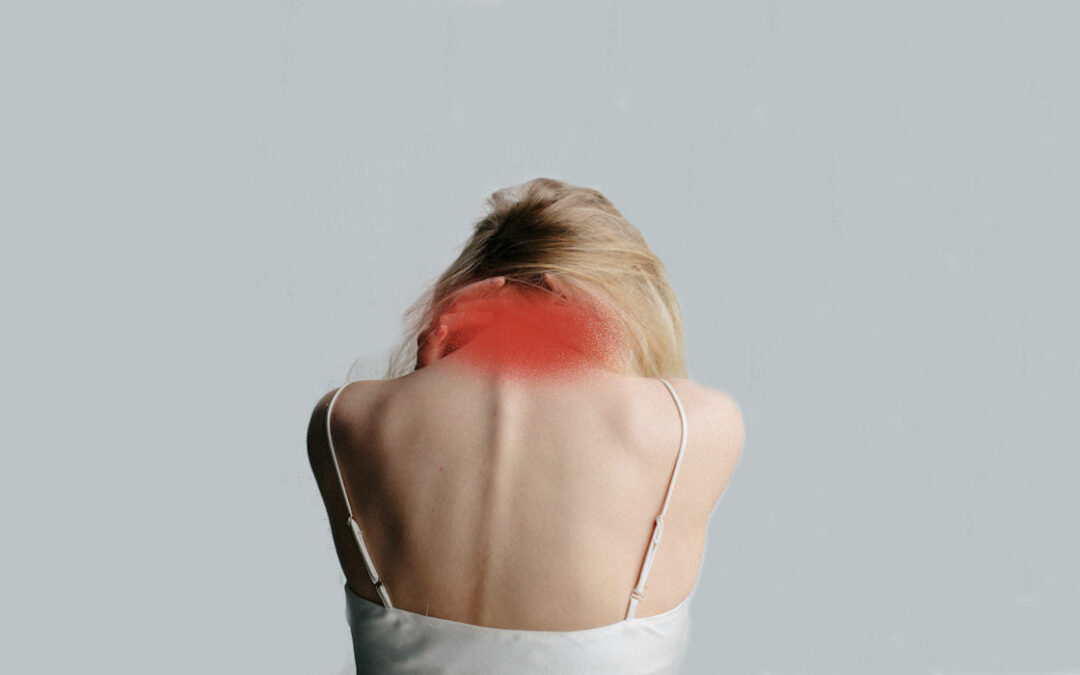
 It is no coincidence if our ancestors made frequent references to this energy that flows through the body—whether we feel good or depressed. Living more simply, more in touch with nature while relying less on the mind to understand the world, they expressed what they felt with complete simplicity. Yet, as soon as we bring up the concept of energy in therapy, the use of this word is contested, criticized and even mocked by many people on the pretext that this concept isn’t scientific. Energy, not scientific? Yet it is scientists who speak of it best, as we will see a little further on. Why this bias in our conception of the world? Why such an inability to understand what Qi, Ki, or Prana is?
Barriers to Accepting the Principle of Energy
The Westerners who came to colonize Asia initially had little interest in the culture of the conquered countries. Southeast Asia was taken over by the Dutch, English, and French to extract raw materials for manufacturing (such as rubber, for example) and for the glory of their respective empires. China was subsequently literally carved up into small pieces after the so-called Opium Wars (1839–42 and 1856–60) by numerous Western powers (those already mentioned, plus the Russians, Americans, Germans, and later the Japanese). As for Japan, Admiral Matthew Perry’s Black Squadron (1874) forced the country to open up to the outside world, whether it liked it or not. This conquering and contemptuous approach toward Asia is our first point of contention with Asia. Western culture was at its peak, with others inevitably seen as nothing more than “monkeys” or “savages.” Today, our contempt for Asian concepts such as Ki is one of the historical consequences of our military conquests. The second problem lies in our conception of energy as a force that moves and shakes things up. This is why being “full of energy” or “hyper-energized” brings to mind the idea that energy stirs things up and multiplies strength. Yet it is possible to be full of energy while remaining very calm at the same time; it is not a contradiction in terms. Simply look at a martial arts master. He will not react to provocations, will not move, but whoever attacks him will quickly—and painfully—discover the difference between the surface appearance and the reality of his depth.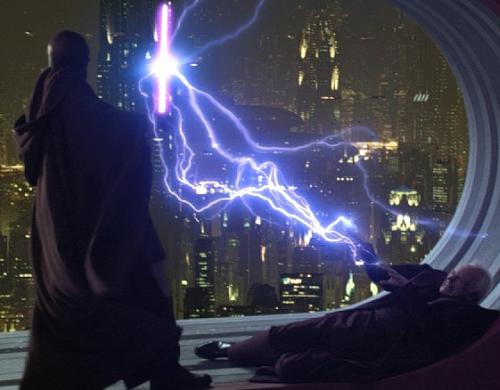 The third problem is the Star Wars saga, as well as all the science fiction films we’ve been inundated with. Our minds are saturated with images of all kinds, and it seems perfectly normal to us that energy should emerge in the form of flashes or more or less colored light. But most forms of energy we know of emit no light, nor any flashes. It’s a shame, but that’s just how it is. Our image-driven culture, our need to see with our own eyes to believe, inevitably feels frustrated by this.
There are, of course, other barriers that prevent us from sensing energy, for that is indeed what it is: sensing. Ki is not approached with the eyes or the nose, but through sensation. It is a sense that we rarely develop satisfactorily in our Western society. Yet we know that blind people are able to guess a color just by touching it. So, how is this possible if not through the ability to sense the warmth of those same colors—that is, through the energy each color intrinsically emits?
The third problem is the Star Wars saga, as well as all the science fiction films we’ve been inundated with. Our minds are saturated with images of all kinds, and it seems perfectly normal to us that energy should emerge in the form of flashes or more or less colored light. But most forms of energy we know of emit no light, nor any flashes. It’s a shame, but that’s just how it is. Our image-driven culture, our need to see with our own eyes to believe, inevitably feels frustrated by this.
There are, of course, other barriers that prevent us from sensing energy, for that is indeed what it is: sensing. Ki is not approached with the eyes or the nose, but through sensation. It is a sense that we rarely develop satisfactorily in our Western society. Yet we know that blind people are able to guess a color just by touching it. So, how is this possible if not through the ability to sense the warmth of those same colors—that is, through the energy each color intrinsically emits?
What do we actually know about energy?
Western science has allowed us to understand energy phenomena by classifying them into categories. The advantage of science is that it cannot be refuted… at least until a new scientist can demonstrate otherwise and advance science. But for now, what does science tell us? That there are several forms of energy:- Thermal energy: this is the oldest form we know of; from ancient volcanoes to the use of fire, thermal energy has been known to humans since prehistoric times.
- Kinetic energy: this is the energy released by movement. All movement consumes energy, but it also creates it.
- Chemical energy: any process involving the breaking down or creation of molecules generates significant energy. We’ve all played at being little chemists at least once in school to learn this.
- Vibrational energy: every wave is a form of energy, which we use to heat food in a microwave, send messages and images over long distances, and even make phone calls, use Wi-Fi, listen to the radio, or watch television—today, everything is transmitted via waves. The sun, which sends us its heat, does nothing more than emit a wave and an atom (at the same time: the famous photon).
- Magnetic energy: magnetism is a phenomenon that was studied very early on by Western science, as far back as ancient Greece. Magnets are the best-known form (Plato was the discoverer of magnetism), but the solar or terrestrial magnetic field (think of a compass) are no less significant. Functional MRI is merely the most recent application of this energy. Not to mention the friction between magnets that generates electricity.
- Potential energy: like all forms of energy, it is also expressed (like almost all other forms of energy) in a unit of measurement called “joules.” It is found in weightlessness, in electric potential, in elastic potential, etc.
- Atomic energy: it comes from atoms, and we know what happens when we split them thanks to the infamous “atomic bomb.”
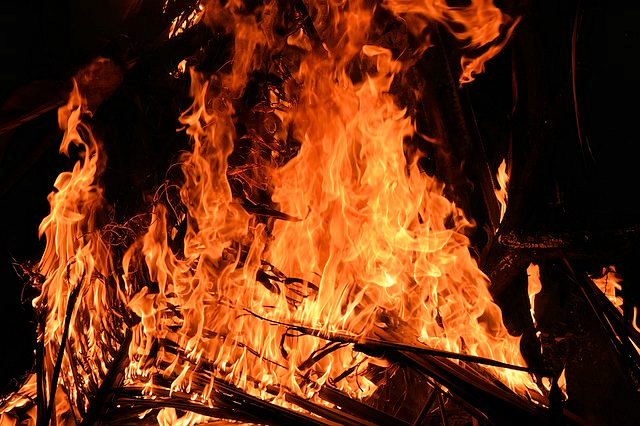
Fire is the oldest form of energy we know.
The Human Body: A Real Battery
According to a principle well known to the Chinese, the macrocosm and the microcosm are found within one another. It is therefore entirely logical that we find all these forms of energy within the human body.- The body is warm, averaging 37°C. We therefore possess thermal energy.
- The body moves—that’s the whole point of the musculoskeletal system. We therefore generate kinetic energy.
- Every time we digest food, we transform it into molecules. The same applies when we produce hormones through our endocrine glands, which means we are also highly efficient at generating chemical energy within our bodies.
- At a level below molecules, we are, naturally, made up of atoms. These atoms spin at high speeds and release energy that we can easily describe as “atomic.” The “miracle” is that they hold together without breaking apart.
- Magnetic energy is present within us. It is precisely what holds our atoms together and also allows the flow of electrical impulses. The impulses of the nervous system are nothing other than our internal electricity. Speaking of electricity, I once asked the Renardières research center at RTE-France (Réseau de Transport d’Électricité) if it was possible to measure the electricity in the human body. The answer was yes, around 0.4 mA.
- The movement of atoms releases energy, as we’ve seen, and this movement propagates in the form of waves. Wave energy is something we also possess and to which we are highly sensitive. Just think of music (sound waves) that can literally make you move from head to toe. More dramatically, we are also very sensitive to high-intensity waves. You only need to stand near a cell phone tower to feel its harmful effects.
- Potential energy often poses a problem for students. But as soon as you sleep, you accumulate energy to potentially restart the next day. When you meditate, you stop moving and also recharge your batteries by clearing your mind (which consumes a lot of energy).
- Add to this what the Chinese call Shen, or spiritual energy. The more this energy is developed, the more powerful it becomes. Since Shen is linked to the Heart, we can also speak of the emotion associated with it, namely joy (and love for us Westerners).
- All other emotions are also sources of energy. Look at what an angry person or a desperate mother trying to save her child is capable of, and you’ll understand the energetic power of emotions.
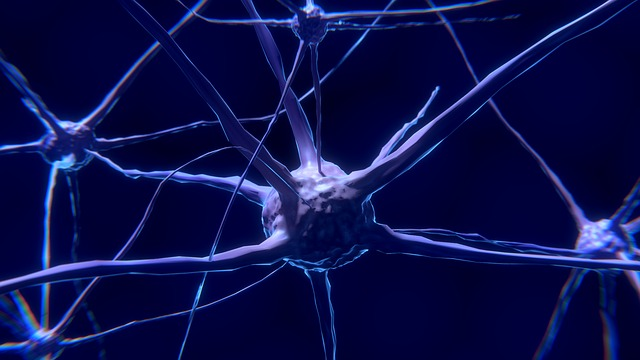
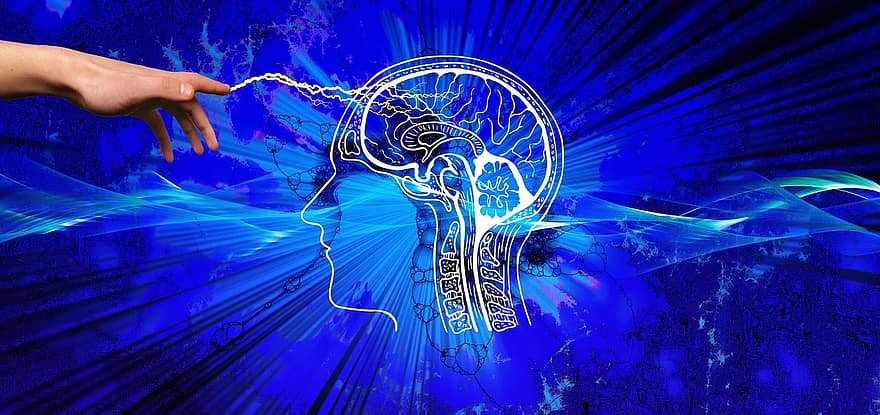
Neurons, like all our nerve cells, function through electrical impulses.
Ki, universal energy
If you liked the explanation above, it’s because your Western mind found logic and food for thought in it. On the other hand, I’m not sure this explanation would satisfy the ancient Chinese when they thought of Qi. Qi represents, above all, universal energy, which certainly flows through the body, but also everywhere else. The entire universe, and by extension nature, is nothing but the expression of this universal energy, and every movement, every transformation, every birth and death, are manifestations of this energy. Wind is energy, just like water, fire, earth, and so on. This is, in fact, why the Taoist sages declared that the five natural forces on our planet were not elements (a mistranslation) but five movements that permeate nature and, consequently, our human nature. This is how we must understand Water, Wood, Fire, Earth, and Metal—the famous Wu Xing. These primordial forces are not foreign to us, since the Greeks, Celts, and Indians of India also possess equivalent systems[ii]. However, while Qi is everywhere, this does not mean that its organization is chaotic, much less anarchic. Its evolution and movements are detailed in the ancient books of Chinese wisdom. There is a hierarchy that assigns the primary role to Heaven, which sends its energy to Earth; Earth receives it, transforms it, and then matures it before sending the energy back to Heaven in turn. This is the (simplified) explanation of Yin/Yang. And just as there is an order in nature, within the human body, this same energy does not circulate haphazardly either. It travels through vertical channels (meridians, extraordinary vessels, etc.)[iii] situated between Heaven and Earth. This is where the technical training in the use of Qi begins.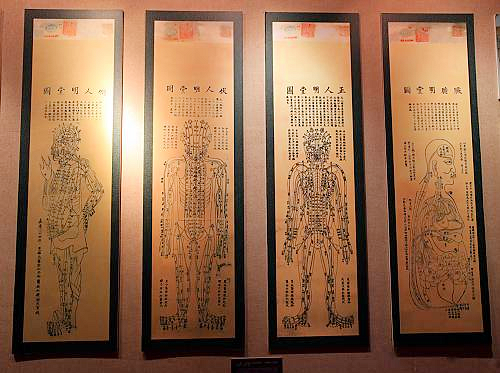
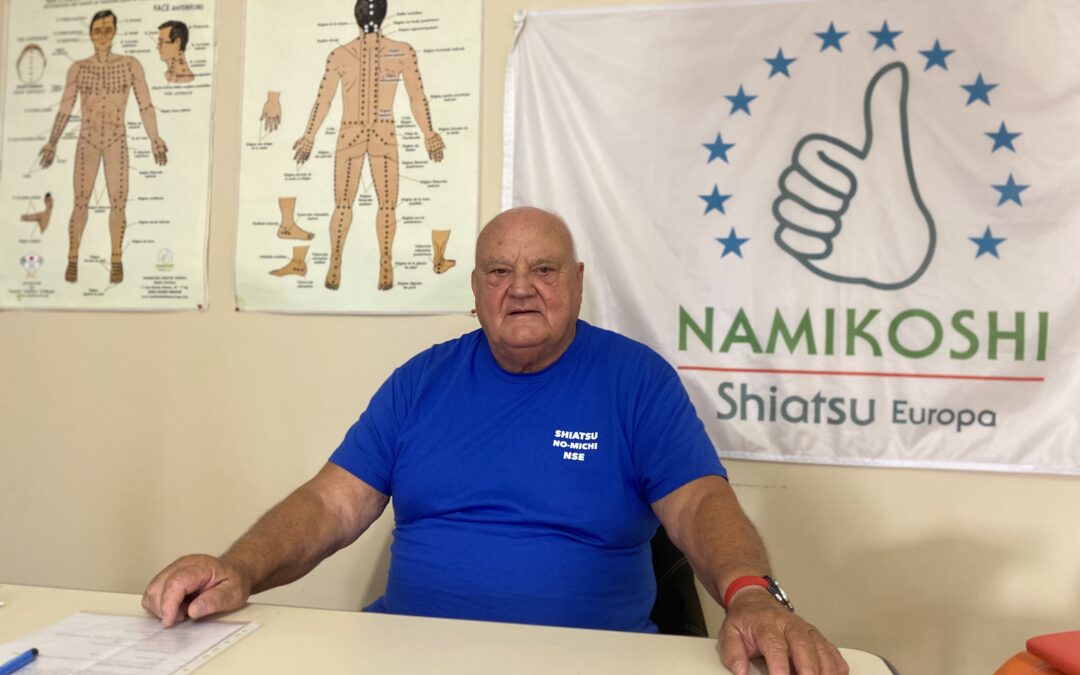
Acupuncture charts are now famous and used all over the world.
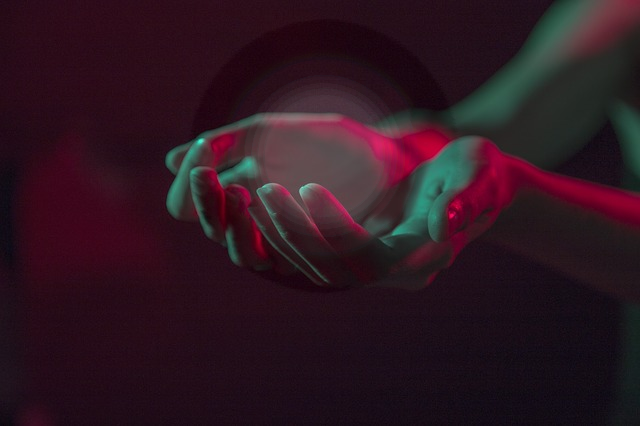
Ki can be quickly felt in the hands.
Notes
- [i] Albert Einstein, of course!
- [ii] “Plato, in the Timaeus, already spoke of the five ‘natural polyhedra’ (octahedron, icosahedron, cube, tetrahedron, dodecahedron), which he linked to the ‘5 universal elements,’ (Air, Water, Earth, Fire, Space), while the Chinese also had in their cosmogony the ‘5 elements of the Earth’ (Metal, Water, Wood, Fire, Earth), just as the Celts had their own (Steel, Waters, Oak, Fire, and Earth). Sanskrit texts, for their part, emphasized the “5 spiritual currents” of Prana distribution, the vital energy (Udana – solid; Apana – Fire; Samana – Water; Prana – Life; Vyana – Air).” in “Le diamant chauve – plus” by Jacques Pialoux, Cornelius Celsus Foundation Publisher – updated 2002.
- [iii] With the exception of the Marvelous Belt Vessel, the only one that is horizontal.
Author
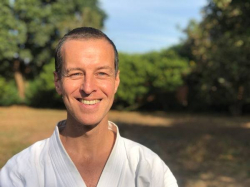
Ivan Bel was born in 1971 and grew up in France on the Atlantic Ocean. A sailing enthusiast, he discovered Japanese martial arts at the age of 13 and continues to do so today. After studying journalism and Chinese at the Oriental Languages School, he travelled for many years to all the countries of Asia and directed the first online magazine on Aikido: "Aïkidoka Magazine". At the age of 28, he discovered Shiatsu, a passion that would never leave him. He set up several schools in Belgium, founded the blog Ryoho Shiatsu and the NGO Missions Shiatsu Humanitaire. He finally moved to Malawi in Bosnia and finally in Italy. He teaches all over the world and continues his journalistic work on Shiatsu and conducts historical research through the group "History of Shiatsu".
Latest posts by Ivan Bel (see all)
- Can Shiatsu reduce anxiety in patients undergoing chemotherapy? - 15 August 2026
- Traditional Chinese Medicine for Shiatsu Practitioners and Other Complementary Health Therapists - 19 July 2026
- Zagreb: Abdominal massage Chinese (qineizang) and Japanese (anpuku) traditions – March, 19th-21st, 2027 with two specialists - 16 July 2026
- Italy: Between Heaven and Earth – An Immersion in Shiatsu and Taoist Philosophy, with Ivan Bel, June 9–13, 2027 - 16 July 2026
- Neck and stiffness in Shiatsu - 26 June 2026
- Poland: Anpuku & Qineizang in Warsaw -11-13th of September 26 - 22 April 2026
Translator

Paula Rolshoven spent her childhood and youth in Switzerland, Austria and France. She pursued studies in Spanish and Portuguese in France and Portugal before working in humanitarian projects in Argentina and Greece. From 2018 to 2025 she lived in Greece, where she completed her training in Zen Shiatsu at the Shiatsu Academy Thessaloniki with Daphne Tzianopoulou in 2022. She deepened her practice with Ampuku and Chi Nei Tsang and currently works as a German teacher in Basel.
Latest posts by Paula Rolshoven (see all)