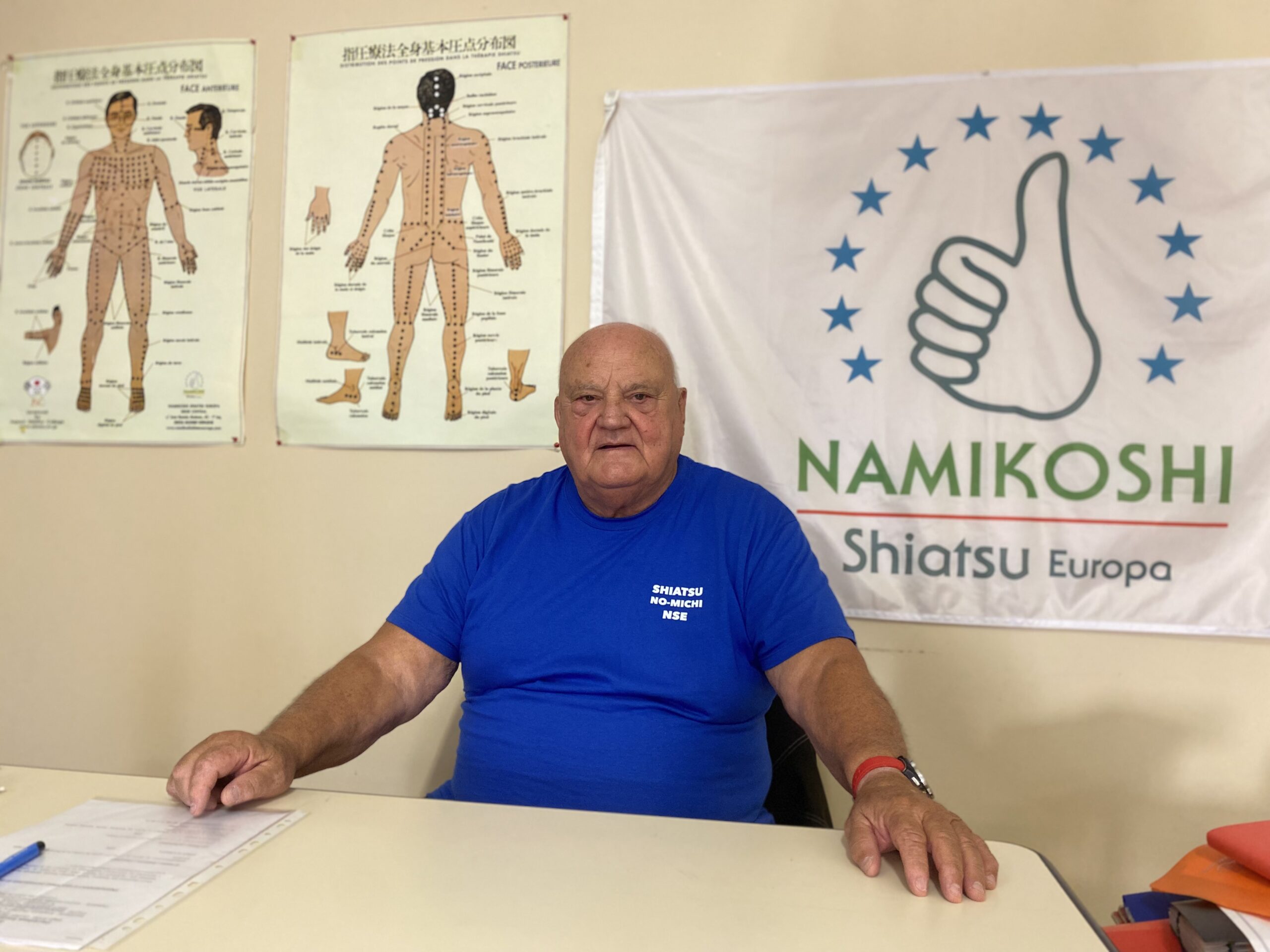
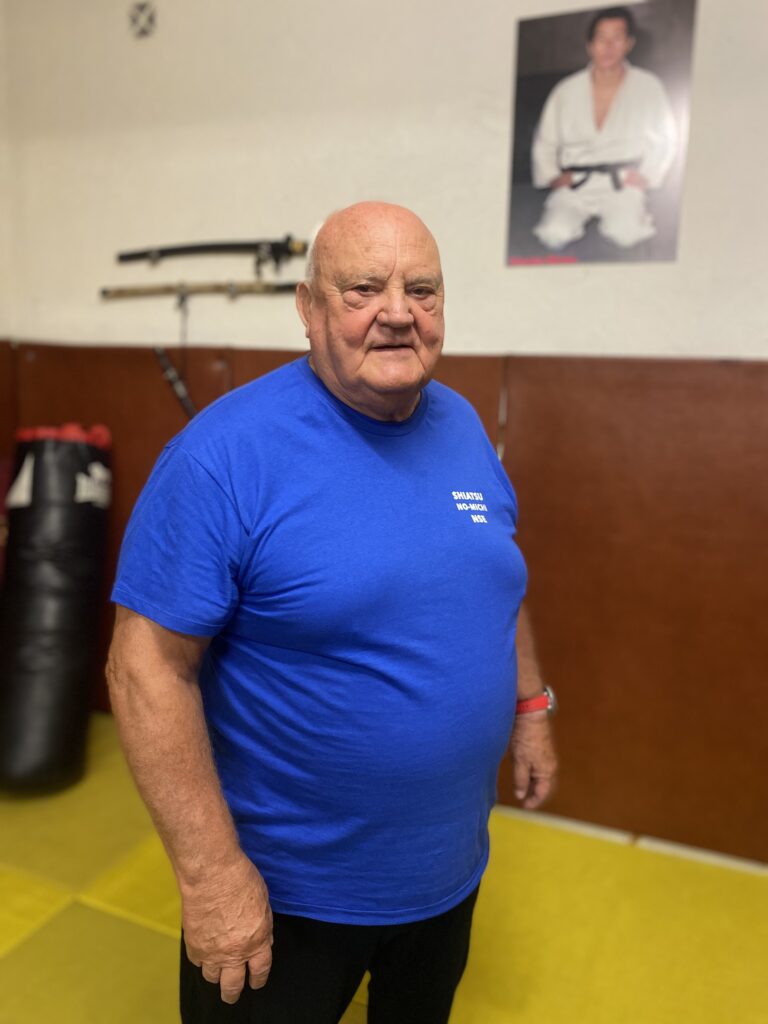
He was one of the first members of the French Federation of Traditional Shiatsu. Rolland Boudet is a master of both martial arts and Shiatsu. In 2000, he founded the Shiatsu Academies of Marseille, Toulouse, Cannes and Bordeaux, accredited by the Japan Shiatsu College, and became a leading figure representing Namikoshi Shiatsu in France. For a quarter of a century, he and his colleague Marie-Josée Gonzales have been training future professionals at his dojo in Marseille. A powerful and authentic encounter.
Hello Rolland Boudet. You’re one of the leading figures in French Shiatsu, as well as in the world of martial arts, yet the general public doesn’t necessarily know you. Tell us a little about your background…
I was born in Aubagne, but I live in Marseille. I discovered Judo thanks to my uncle who was a teacher. I also became a Judo teacher, 4th Dan at the age of 23, and also a teacher of traditional Jiu-jitsu. I actually began to understand the field of energy through martial arts. This led me to create my own martial art in 1990, Ki Shin Tai Jutsu — in kanji 気 心 体 術 — a technique for the energy of the body and mind. At that point, I became interested in Japanese medicine.
So, very quickly, you became interested in the energetic arts?
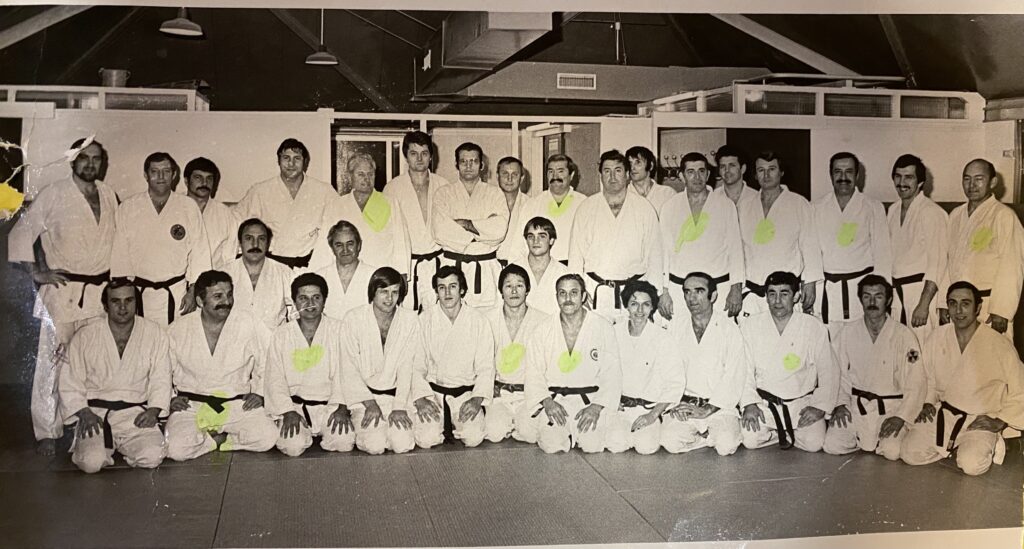
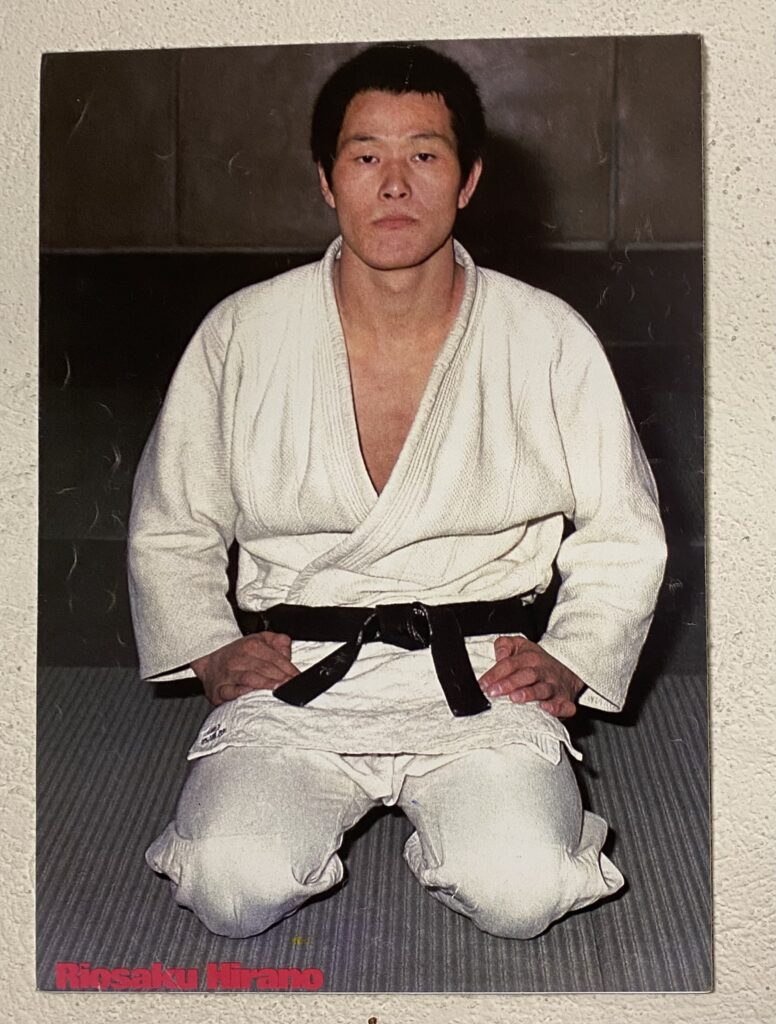
I was only familiar with the physical aspect of martial arts and combat sports. Little by little, I learned techniques based on concentration, breathing, and the calmness that this can bring, and discovered other concepts such as the five elements. I had an initiation to it with my Judo master Ryosaku Hirano, the one on the poster in the dojo (a signed portrait is indeed displayed on a wall of the dojo, editor’s note). He was the one who gave me my first Shiatsu treatment. The first time, it relaxed me (he laughs). I realized that it felt good and that it had positive results for athletes, with a real reduction in their aches and pains. In the 1980s, there were no Shiatsu training schools. At first, I had to turn to traditional Chinese medicine, taking courses at the Paris Ecole des arts énergétiques appliqués, which no longer exists [1]. There, we learned the basics of TCM, meridians, Asian massage, etc. I also did other training courses in energetics.
Who really introduced you to Shiatsu?
After studying Chinese medicine and other subjects for at least three years, I wanted to try Shiatsu. I started out as a self-taught practitioner in the late 90s, discovering different styles of Shiatsu, but some of them didn’t interest me. They weren’t focused enough on therapy. I became interested in the Namikoshi style in 1995. The President of the French Federation of Traditional Shiatsu, Jean Dirand [2], was also a Namikoshi practitioner. I continued to practise this form of Shiatsu, which was recognised by the Japanese government in the early 1950s, with him.

Was it from that moment that you began developing the Namikoshi style in France?
Yes, during a course at the Japan Shiatsu College in the Paris region, I met masters such as Shigeru Onoda and Akitomo Kobayashi from the Namikoshi School. With Marie-Josée Gonzalès, who works with me, we then took a course with Shigeru Onoda at his school in Madrid [3] to perfect our skills at the European Namikoshi Center. We also took part in other international training courses, notably in Belgium [4]. It was during this course that Kobayashi Sensei, who had exceptional knowledge, gave a lecture on the knee and officially asked me to look after the French-speaking trainees for the three days. We then obtained the official title to represent the Namikoshi style and the Japan Shiatsu College in France from 2010 onwards.
You have also welcomed Onoda to Marseille on three occasions since the creation of the Académie de Shiatsu in 2000. This established Shiatsu Namikoshi in France. Why did you decide to create your own style, Nomichi Shiatsu?
As I had studied other Japanese schools of Shiatsu, I included certain techniques in my own teaching, even if 90% of my teaching remains Namikoshi. That’s why I wanted to create my own school, related to Namikoshi [5] but including other techniques. Each Namikoshi master has his own style. Some will want to talk more about anatomy and physiology, like Shigeru Onoda who created Shiatsu Aze, or Namikoshi Sensei’s grandson, while others will talk more about energetics. So, I wanted to bring in the energetic knowledge I’ve acquired over the years. By delving deeper into energetics, we can also better understand the principle of the Namikoshi school which is based on the quality of pressure. If we apply pressure haphazardly, we are no longer practising Shiatsu therapy. I conceived and created Shiatsu Nomichi during my training with Onoda.
How would you define Nomichi Shiatsu [6] ?
It means the way, the path of Shiatsu. It’s a path to follow, like the martial arts, and the idea is to be constantly evolving. Even now, I am discovering new things in Shiatsu. It’s a perpetual renewal, a new understanding of Shiatsu therapy. That’s why I like to talk about energetic acupressure. It is not just finger pressure, otherwise it would be purely mechanical.
How do you explain the position of Shiatsu in France, and why is it so complicated?
Everything related with so-called natural medicine is blocked… Yet a few years ago, I taught as part of the continuing education program for qualified physiotherapists at the University of Aix-Marseille, at the invitation of the director, and even in Antibes. But as I wasn’t a physiotherapist, my lectures were eventually discontinued.
However, the trigger points that physiotherapists use in their sessions are partly derived from the tsubos of Shiatsu, Anma and Tuina: this is typically acupressure!
Yes…Some physiotherapists have trained in Shiatsu and have even stopped practising physiotherapy! They realised the results they were achieving… and without using a machine…
It’s important to bear in mind the parallels between the meridian energetic system, the nervous system and the circulatory system, as all three work in synergy. Many people only talk about energy but forget that we have a human body. And doctors forget that we have an energetic body (he laughs).
In your opinion, is this the key issue in treatment?
Western doctors treat symptoms, not causes. And they often stick to their own specialties. But in energetics, all systems work in synergy. Just because we work on the digestive system doesn’t mean we forget that we also have a respiratory system. The human body is a beautiful machine made up of several systems. As soon as one of them malfunctions, so do the others.
What’s the solution to bringing Shiatsu to life in France? You obtained the RNCP, then it was abolished… How can you make this practice exist within an official framework?
The problem is that in France… it’s a terrible mess. All kinds of people claim to practise Shiatsu, but in reality, they’re a mixture of a bit of everything, especially relaxing Shiatsu. Everyone refers to Masunaga, but it’s not even that. With the RNCP (N° 32026) certification for Acupressure and Shiatsu Technicians, which we had obtained on an individual basis, the government wanted to regulate therapeutic practice. However, for the government, certain practices were little more than well-being and comfort massages. So, we suffered from the government’s failure to take into account the differences between certain schools and types of Shiatsu. The same applies to other natural medicines, some of which have also lost their RNCP title. It was the Ordre des Médecins (French Medical Doctors’ Association) who made the decision. And now, we only exist unofficially. In fact, we’ve gone back 20 years! Yet we had made great progress with the Fédération Française de Shiatsu Traditionnel (FFST). [7]
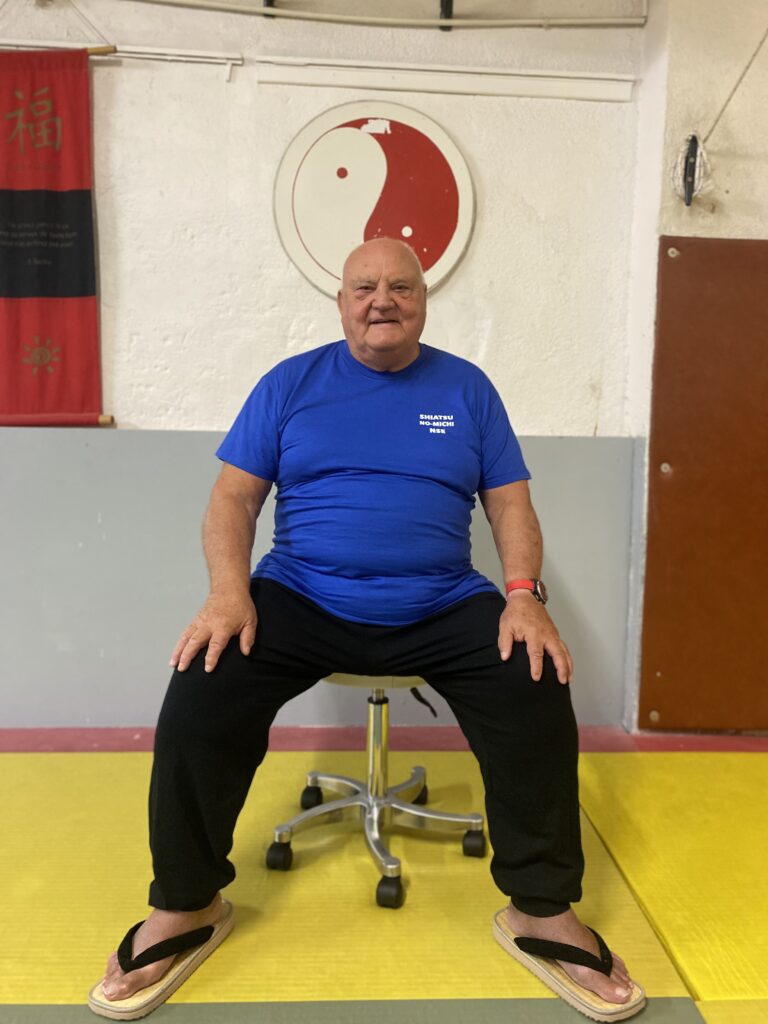
(C) Agathe Lagarrigue
How can we ensure that this knowledge is not lost, and that it is passed on? Do we need a European diploma to validate recognition and professionalization?
This is a national issue, and an international one. Moreover, the position of Shiatsu is not the same everywhere in the world. France is lagging far behind the rest of Europe. If we look at Switzerland, it’s doing very well, because the Swiss government allows people to work in a recognised capacity. Until there is a state diploma, it will not work. A European diploma is fine, but it must be recognised by France. Having fought for this for twenty years, I know this well. It is exactly the same in the martial arts sector. I’ve been through the same thing, except for Judo, Karate, Aikido, the rest… It’s very difficult. I also tried to promote Shiatsu, especially when we got the RNCP. But now that we don’t have it, it’s too complicated.
So how do we move beyond 20 years of trial and error?
One way is to intervene in the medical field, as we are doing at Bordeaux Hospital [8]. This is extremely useful. We get great feedback. We have also done this in Marseille and Aubagne as part of pain management. But often it is blocked by doctors afterwards…
Let’s come back to your background. If you had one memory of a Shiatsu treatment, what would it be?
I treated the boss of a large French group who lived part of the time in Japan. He wanted me to go everywhere with him. I followed him for three years, along with other personalities. Once, he sent me a helicopter to receive treatment. And I was able to stay a whole week on his estate. It’s a fond memory, because this person knew a lot about energetics and was interested in it. We talked about the Shiatsu he received in Japan at the Namikoshi school and with me when he was in France in the south.
What are the essential notions of Shiatsu that you have been taught?
To bring well-being and relieve pain and problems that people may encounter. You have to be committed, not look at the number of sessions or the financial aspect. What’s important is to give what’s in your heart to the person you’re caring for, aiming to heal them. That’s what fascinates me about Shiatsu.
It’s the famous kokoro, Namikoshi’s key concept which is reflected in his motto [9]…
That’s it! You can’t do Shiatsu in a strictly professional way if you don’t have the love and care to bring comfort. This is achieved through Shiatsu, discussion and contact. Touch remains very important, primordial. It’s not magnetism, but there has to be contact on an energetic level. That’s why I like the term ‘energetic acupressure’.
You also like the term ‘sensitive’…
When Namikoshi Shiatsu was recognized in Japan in 1957, they didn’t want to talk too much about energetics, as they didn’t want to include too many TCM notions. They presented it as something similar to chiropractic or physiotherapy. What’s certain is that it’s a very sensorial, sensitive practice. Tokujiro Namikoshi created his style of Shiatsu without any knowledge of energy, anatomy or physiology [10]. It was while trying to treat his mother that he found certain areas and how to work on them. This practice must therefore remain in the realm of the sensitive, with energy points on or off the meridians.
If there was one point to remember, it would be…
We always say 36ST… There isn’t just one, it can’t be just one! I’d say it’s not a point, but a line. It’s the Joko line, which groups together 10BL, 20GB and 12GB [11]. It can be used to treat many problems. After that, there are no miracle points…
Why is it so important to respect the basic kata?
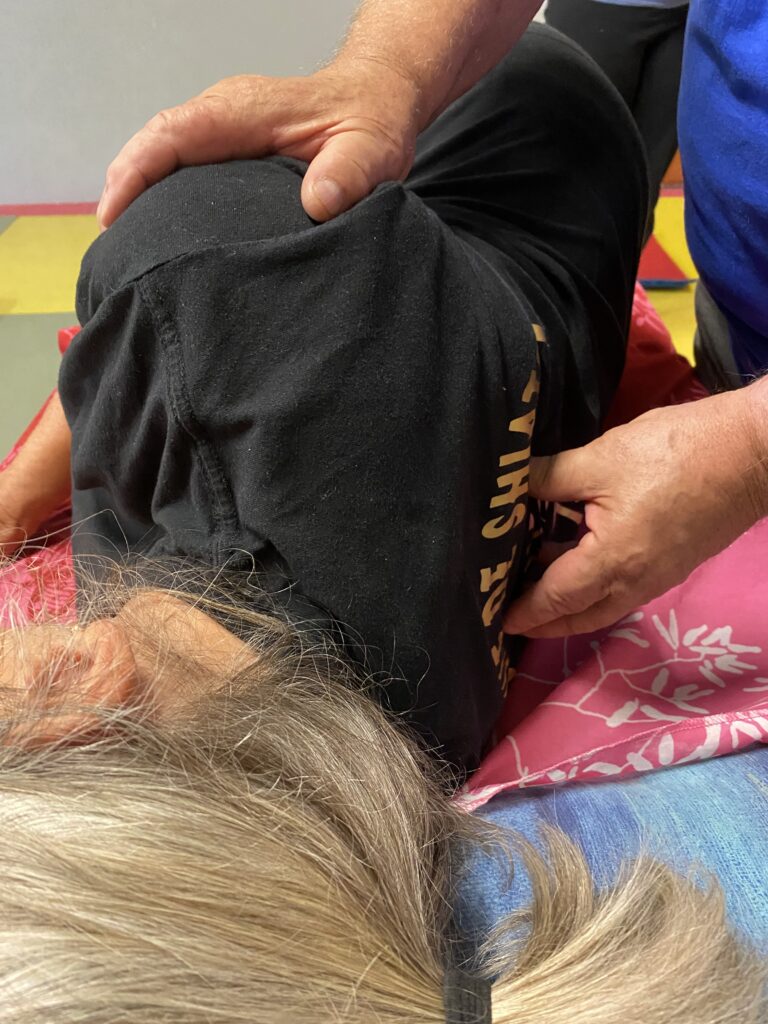
It must be respected because it is what gives you the quality of the Shiatsu technique. The basic kata is designed to teach you how to do Shiatsu. That is why the postures are very precise, as are the positioning, the intensity of the pressure, working with one thumb, two thumbs, joined thumbs, palm pressure, etc. You really learn how to do basic Shiatsu on the whole body. This is crucial, and what’s more, from this basic kata, you must discover the role of the hara. What is surprising is that in Namikoshi’s books, they don’t mention the hara at all (he laughs). But Kobayashi Sensei does. Some people also keep their secrets to themselves. I developed my hara in martial arts, long before Shiatsu, through Jiu jitsu and Ki shin tai.
But can Ki really be taught?
Yes, it can be experienced and taught, provided the person is open to it, of course. And developing it takes time… In my opinion, Ki can be taught through traditional Japanese martial art technique, or through Shiatsu. I’ve also noticed that Ki doesn’t necessarily interest students. Many people want to learn Shiatsu quickly and mechanically. And when they’ve completed three years’ training, they think they know it all… When in reality, they are far from it.
When can you call yourself a practitioner?
It takes at least four years. At that point, you are a practitioner who sticks to cases that are not too difficult. And that’s how you automatically progress, by trying to improve yourself and finding ways to treat the person who comes to you. Because that’s when certain things click into place, when you understand the theoretical lessons, you’ve learned much better. In my opinion, Shiatsu is a passion, a passion for accompanying people in their care. If it’s not a passion, well…
Where does this desire come from?
I don’t know, because when I was young, I wasn’t attracted to medical care. Then, when I became a young adult, I took the physiotherapy and nursing exams. I just missed the physio exam and discovered the medical world. I worked for a while in a clinic, then devoted myself completely to the martial arts and Shiatsu. I was also a bank clerk for 5 years. It was a lot easier when it came to working hours! Nursing is also a profession that normally requires passion. You can immediately see the difference when it’s done with passion. It’s not just the technical act. You can see the relationship between the nurse and the patient. I was ill for two months last year, and I can see the difference between an indifferent person and a caring one. This brings us back to the kokoro.
What advice would you give to a young practitioner?
Above all, he must continue his training, stay connected so he can continue learning and not lose touch. It also requires real personal commitment. If you have a job, you need to make sure it allows you time to practise Shiatsu, even if it means working part-time. And then you need to make yourself known. You also need to nourish your ki…
What makes a good practitioner?
Their effectiveness! Whether they get results. They also need to be honest. You mustn’t lead people to believe that you are going to cure them. You need to be humble, even in your attire, and tell the person, “I am going to help you and try to treat you”. You need to be attentive.
After all these years of practice, what makes you so passionate?
I’m always discovering new sensations and new understandings of acupressure energetics. It fascinates me to see that we can achieve results in complicated pathologies, that we can accompany certain illnesses, and if we can’t cure them with Shiatsu, make them easier to bear. That’s why I propose themes such as multiple sclerosis in my training courses and workshops. Shiatsu can help a lot and even slow down the progression of problems. That’s already quite something.
Thank you for this wonderful discussion Rolland, it was important to hear from you.
Thank you very much!

Notes
- According to Rolland Boudet, this school was located in the 16th arrondissement. Among other things, acupressure and herbal medicine were taught there.
- Jean Dirand, co-founder and former president of the French Federation of Traditional Shiatsu from its creation in 1994 until 2002.
- Shigeru Onoda founded the Escuela Japonesa de Shiatsu in Madrid, accredited by the University of Shiatsu in Japan, the Japan Shiatsu College and Namikoshi Shiatsu Europa. He is also the founder of the Aze Shiatsu style. https://shiatsudo.com/fr/maestro/
- This course was organised by Ivan Bel in 2010 in Brussels.
- The official website of the Shiatsu Academy, which brings together schools in Marseille, Cannes and Toulouse. https://academie-shiatsu.fr
- Shiatsu No Michi 指圧の道 means the way or path of Shiatsu.
- https://ffst.fr
- Since January 2025, the Shiatsu Academy has been working in partnership with the Saint-André University Hospital in Bordeaux to prevent workplace psychosocial risks. This programme offers sessions dedicated to the hospital’s healthcare and administrative staff to help them manage stress and improve their well-being at work.
- Kokoro means heart [心] and refers to the emotional and human aspect, the spirit within each of us. ‘The heart of Shiatsu is like a mother’s love. Pressure on the body stimulates the source of life,’ said Tokujiro Namikoshi.
- Rolland Boudet recounts the birth of the future practitioner’s techniques when, as a child, Namikoshi Sensei soothed his mother’s pain with acupressure. His mother suffered from polyarticular rheumatism. It was through empirical observation that the young Tokujiro Namikoshi discovered that pressure, friction and massage relieved her suffering. It was only later that he trained in Anma massage, before founding the Shiatsu Therapy Institute in Hokkaido in 1925.
- The joko line features a series of points, known as Window of Heaven points in TCM. They are located at the base of the occipital bone.
Author
- Interview with Rolland Boudet, pioneer of Shiatsu in France - 17 November 2025
Proofreading
Her interest in caring for others led her to become a nurse, graduating in 2005. She works in adult surgical wards. She discovered shiatsu in 2014, after a complicated pregnancy and birth, shiatsu relieved the anxieties of her 3-month-old son. She began training at ITMTC Amiens in 2016, graduating in 2019.
Along with her job as a nurse, she opened her shiatsu practice and continues to learn with, among others, Ivan Bel.